
Ever had that “heavy” feeling after a meal, or felt like your energy just vanished by 2 PM? I’ve been there too. It’s that uncomfortable bloating and sluggishness that makes you wonder if your digestive system has staged a quiet protest. We often hear that the secret to feeling like yourself again starts in your gut, but the grocery aisle can be confusing. You see dozens of tubs claiming to be the “healthy choice,” yet your stomach still feels like it’s doing somersaults.
The truth is, while we’ve been told for years that yogurt is the ultimate superfood, not every cup is a winner. In fact, some of those “healthy” snacks are essentially dairy-flavored candy.
If you’ve ever felt frustrated trying to find the best yogurt for gut health amidst a sea of sugar and marketing jargon, you aren’t alone. Let’s get to the point and figure out which yogurts actually do the heavy lifting for your digestion, immunity, and overall vibe.
Jump To Section
Yogurt – What Is It Good For?
Think of your gut as a garden. To keep it lush and green, you need the right seeds and a bit of daily maintenance. That is exactly what a high-quality yogurt provides.
But beyond the creamy taste, what is it good for? Most of us know it helps with digestion, but its benefits go much deeper than just “keeping things moving.”
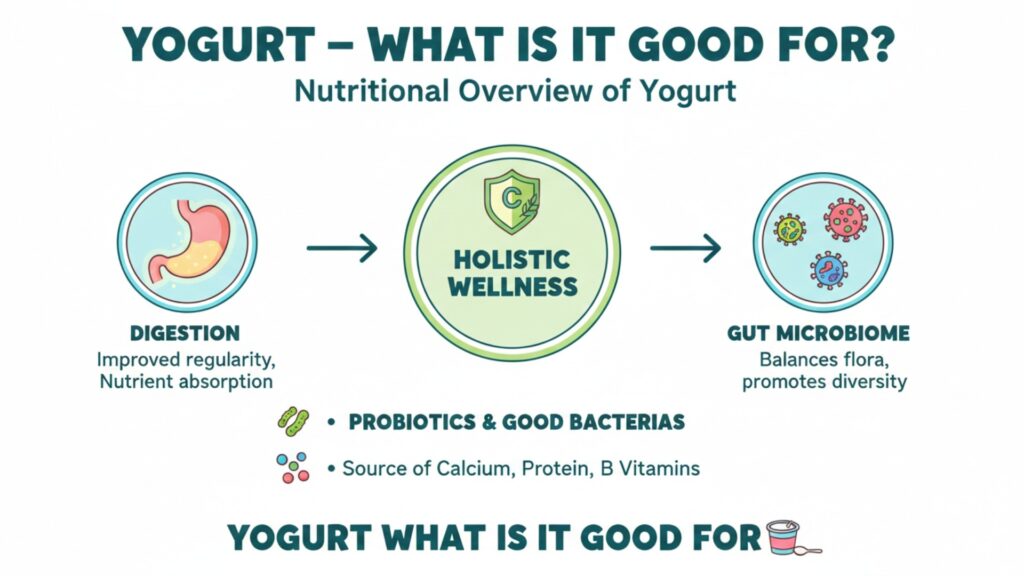
At its core, yogurt is a nutritional powerhouse packed with calcium for your bones, high-quality protein for muscle repair, and B vitamins that keep your energy levels steady. However, its real “secret sauce” is the presence of the best probiotic yogurt strains.
These tiny, living organisms act as a natural defense system. By flooding your gut with “good bacteria,” yogurt helps crowd out the “bad guys” that cause bloating and inflammation. This doesn’t just soothe your stomach; it also strengthens your immune system, as nearly 70% of your immune cells live right there in your gut.
The Power of Probiotics and Live Cultures
The magic happens during fermentation. When you choose a yogurt with live and active cultures, you are consuming millions of microscopic allies. These probiotics break down lactose, making it easier for many people to digest dairy without the usual discomfort.
Furthermore, a daily serving of yogurt for gut health helps maintain the delicate balance of your microbiome. When your microbiome is balanced, your body can better absorb nutrients from all the other healthy foods you eat.
Whether you prefer a thick Greek-style or a convenient yogurt drink, you’re giving your body a natural tool to fight off fatigue and support a healthy metabolism.
Does All Yogurt Have Probiotics?
It’s the million-dollar question in the dairy case: Does all yogurt have probiotics? You’d assume the answer is a resounding “yes,” but here is the cold, hard truth: no, they don’t.
While all yogurt starts its life with live bacteria (that’s how milk becomes yogurt!), the journey from the farm to your fridge changes everything. Many commercial yogurts undergo “heat treatment” after fermentation to extend shelf life. This process is great for the grocery store’s bottom line, but it’s bad news for you because it kills off the very “good guys” your gut is craving.
So, how do you tell the difference between a high-value probiotic yogurt and just a cup of sour milk? It all comes down to the processing. A “regular” yogurt might still have protein and calcium, but it lacks the bioactivity needed to change your gut health.
To get the real benefits, look for yogurt with live and active cultures on the label. This is your guarantee that the bacteria are still alive and kicking, ready to work on your digestion.
The Sugar Trap and Processing
Beyond heat, there is another “probiotic killer” to watch out for: excessive sugar. Many brands mask low-quality ingredients with syrups and artificial sweeteners. High sugar levels can actually feed the harmful bacteria in your gut, which basically cancels out any benefit the best probiotic yogurts were trying to provide.
If you want to ensure you’re getting the real deal, stick to plain versions and add your own fruit. This ensures you’re getting the best yogurt for good bacteria without the sugar-induced inflammatory spike.
Remember, if the label doesn’t explicitly mention “live cultures,” you’re likely just eating a snack, not a supplement.
What Does “Live and Active Cultures” Mean?
If you’ve ever squinted at a yogurt tub wondering if you need a science degree to understand it, you aren’t alone. “Live and active cultures” is just a fancy way of saying the bacteria used to turn milk into yogurt are still alive when the product hits the shelf.
During fermentation, these cultures feast on milk sugars (lactose) and produce lactic acid. This doesn’t just give yogurt its signature tang; it creates a thriving environment for yogurt with live active cultures to grow.
Why does this matter? Because for a probiotic to work, it has to be a “survivor.” It needs to make it past your stomach acid and into your intestines. If the yogurt was pasteurized after fermentation, those cultures are gone, leaving you with a snack that’s missing its most powerful health benefit.
How to Read Your Yogurt Label Like a Pro
To find the best yogurt for gut health, you need to look past the pretty packaging and dive into the fine print. Here is your quick checklist for the next time you’re in the dairy aisle:
- The “Seal” of Approval: Look for the official “Live & Active Cultures” seal. This confirms the product contains at least 100 million cultures per gram at the time of manufacture.
- Specific Strain Names: Truly high-quality best probiotic yogurts will list the specific “warriors” inside, such as Lactobacillus acidophilus, Bifidobacterium lactis, or L. bulgaricus.
- The Order of Ingredients: If sugar or fruit juice is listed before the milk or cultures, put it back. You want the bacteria to be the star, not the sweetener.
- “Heat-Treated” Warning: This is a major red flag. If the label says “heat-treated after culturing,” the probiotics have been neutralized.
- “Made with” vs. “Contains”: Be wary of vague language. Yogurt with live and active cultures is a specific standard; “made with” doesn’t always mean they survived the journey to the store.
By paying attention to these small details, you ensure you’re buying a functional food that actually improves your wellness, rather than just another grocery item.
Does Greek Yogurt Have Probiotics?
If you’ve walked down a dairy aisle lately, you know Greek yogurt is the reigning heavyweight champion. But does it live up to the hype for your microbiome, or is it just a high-protein trend? The short answer is: yes, Greek yogurt does have probiotics, but with a catch.
The process of making Greek yogurt involves straining out the liquid whey. This is what makes it so thick, creamy, and protein-packed. While the straining process removes some of the sugar (lactose), the beneficial bacteria, those “good guys” we’ve been talking about, remain tucked away in the thick solids.
This makes it a fantastic yogurt for gut health because you’re getting a concentrated dose of nutrients without as much of the sugary filler found in traditional styles.
When Greek Yogurt Wins (And When It Doesn’t)
Not all Greek tubs are created equal. If the yogurt is flavored with “fruit on the bottom” or honey, the sugar content can skyrocket — which can actually trigger inflammation in the gut. To truly reduce gut inflammation, it’s important to choose wisely. To get the most out of your best probiotic yogurt, stick to the plain versions without added sugars.
Here is a quick breakdown of how Greek yogurt stacks up against regular yogurt when it comes to your health goals:
| Feature | Greek Yogurt | Regular Yogurt |
| Protein Content | Very High (Double regular) | Moderate |
| Probiotic Count | High (if live/active) | High (if live/active) |
| Texture | Thick and creamy | Thin and smooth |
| Sugar/Lactose | Lower (due to straining) | Higher |
| Best For | Weight loss & muscle repair | General hydration & light snacking |
When you choose a high-quality brand like Chobani protein yogurt, you’re getting that dual benefit of muscle-building protein and gut-supporting cultures. Just remember to check the label for those “live and active” strains to ensure you’re getting the digestive support you expect.
Which Yogurt Should You Actually Buy?
Ready to shop but feeling overwhelmed? Don’t worry, I’ve done the homework for you. Whether you’re looking for a high-protein punch to fuel your workout or a dairy-free delight that actually tastes good, this cheat sheet covers the heavy hitters for 2026.
Remember, the best yogurt for gut health is the one that fits your lifestyle and your taste buds. Here is how the top brands stack up:
| Brand / Type | Key Benefits | Probiotic Powerhouse? | Best For… |
| Siggi’s Icelandic Skyr | Ultra-thick, low sugar, very high protein | Yes (Multi-strain) | Satiety & weight management |
| Chobani Protein Yogurt | Great texture, accessible, zero-sugar options | Yes (L. Acidophilus) | Post-workout recovery |
| Stonyfield Organic | Clean ingredients, pasture-raised dairy | Yes (6+ live cultures) | Families & organic purists |
| Activia (Daily Drinks) | Targeted “regularity” strains | Yes (Bifidus Animalis) | Bloating & digestive speed |
| Cocojune (Coconut) | Dairy-free, plant-based, very “clean” label | Yes (BB-12 & more) | Vegans & lactose sensitivity |
| Bio-K+ (Drinkable) | Medical-grade potency, very high CFU | Yes (CL1285® blend) | Serious gut repair |

Best Probiotic Yogurts You Can Find
Walking into the dairy aisle can feel like a maze of labels and claims. If you have ever felt overwhelmed trying to pick the “right” one, you are definitely not alone. The good news? You don’t need to be a nutritionist to find the best probiotic yogurts. Some of the most effective options are likely sitting right on the shelf of your local grocery store.
Here is a look at the most reliable brands that balance great taste with the “good bacteria” your body is looking for.
Activia Yogurt
If your main goal is to beat that sluggish, bloated feeling, Activia is often the first name that comes to mind. What sets it apart is a specific probiotic strain called Bifidobacterium animalis lactis DN-173 010, which the brand spent years researching.
A quick look at the Activia yogurt nutrition facts shows that it is designed specifically to help with “transit time,” which is just a polite way of saying it helps keep things moving smoothly. It is a convenient, everyday option for anyone who wants a targeted approach to digestive comfort without a lot of fuss.
Chobani Protein Yogurt
If you are someone who hits the gym or just needs a snack that actually keeps you full, Chobani protein yogurt is a fantastic double-threat. Because it’s a Greek-style yogurt, it is strained to be much thicker and packed with significantly more protein than regular versions.
Even with the focus on protein, they don’t skip the gut benefits. It is loaded with live and active cultures like L. acidophilus and S. thermophilus. It’s the perfect choice for when you want to support your muscles and your microbiome at the same time, especially if you opt for their “less sugar” varieties.
Bio-K Probiotics
Sometimes, your gut needs more than just a maintenance snack; it needs a total reset. That is where bio-k probiotics come into play. These are concentrated, drinkable yogurts that lean more toward “wellness tool” than “dessert.”
Bio-K+ is famous for its patented blend of three specific probiotic strains that are clinically proven to reach your gut alive. It is often the “go-to” choice for people looking for digestive recovery after a round of antibiotics or during a flare-up. If you want a therapeutic dose of bacteria in a small, powerful shot, this is the one to look for.
Coconut Probiotic Yogurt – A Dairy-Free Option
If you have decided to go dairy-free, whether it’s for your skin, your digestion, or a vegan lifestyle, you might feel like you’re missing out on the “probiotic party.”
But don’t worry, the rise of coconut probiotic yogurt has made it easier than ever to keep your gut happy without a single drop of cow’s milk.
For those who are lactose intolerant, this isn’t just a snack; it’s a way to enjoy that creamy, tangy experience without the bloating and discomfort that usually follows.
But does a plant-based version actually hold up when compared to the best yogurt for gut health? The answer lies in the fermentation.
As part of natural remedies for bloating, adding a dairy-free probiotic option like coconut yogurt can help support healthy gut bacteria, improve digestion, and reduce excess gas. When your gut microbiome is balanced, your body is better able to break down food efficiently — which may mean less heaviness and fewer uncomfortable flare-ups.
Is It “Healthier” Than Dairy?
It’s a common misconception that “plant-based” always means “lower calorie.” In reality, coconut yogurt is naturally high in healthy fats, specifically Medium-Chain Triglycerides (MCTs), which your body uses for quick energy. However, it can be a bit of a trade-off:
- Protein Gap: Unlike Chobani protein yogurt, coconut versions are usually very low in protein. If you’re using it as a meal replacement, you’ll want to add nuts or seeds.
- The Sugar Trap: Because coconut can be quite tart when fermented, some brands load up on cane sugar. To find the best probiotic yogurt in the vegan aisle, always reach for the “unsweetened” or “plain” versions.
- The “Clean” Factor: Check for thickeners. Since coconut milk is thin, many brands use gums or starches to get that “yogurt” feel. Look for brands like The Coconut Cult or Cocojune that focus on minimal, whole-food ingredients.
Whether you’re pouring it over granola or blending it into a smoothie, coconut probiotic yogurt is a delicious, gut-friendly ally. It’s living proof that you don’t need dairy to support a thriving microbiome.
Yogurt Drinks vs. Spoon Yogurt
In the world of gut health, you often have to choose between a classic bowl of yogurt or a quick yogurt drink like kefir or Bio-K+.
But is there actually a difference in how they work? While a spoonable yogurt is great for a filling breakfast, drinkable versions are often “fermented longer,” which can sometimes lead to a higher concentration of yogurt with live active cultures.
Essentially, a yogurt drink is a liquid version of your favorite probiotic food for gut health, often containing a wider variety of bacterial strains.
Because they are thinner, they are incredibly easy for your body to process on the go. However, some drinkable versions can be “sugar bombs” to help mask the sour taste of fermentation, so it’s vital to check the label before you chug.
Which One Should You Grab?
If you’re trying to decide which format fits your lifestyle, here is a quick breakdown of how they compare:
| Feature | Spoonable Yogurt | Yogurt Drink (Kefir/Shots) |
| Probiotic Diversity | Moderate (2–5 strains) | High (Often 10+ strains) |
| Protein Content | High (especially Greek style) | Moderate to Low |
| Convenience | Requires a seat and a spoon | Grab-and-go friendly |
| Satiety | Keeps you full longer | Quick nutrient hit |
| Best For | Meal replacement/Breakfast | Digestive “boost” / Quick snack |
When it comes to the best probiotic yogurts, the “spoon vs. sip” debate really comes down to your personal goals. If you want a full meal that supports muscle growth, a Chobani protein yogurt bowl is the winner.
But if you’ve just finished a heavy meal and want to help your digestion catch up, a quick probiotic shot might be the more effective tool.
Healthiest Yogurt Options in Canada
If you’re shopping in the Great White North, you’re in luck. Canada has some of the strictest dairy standards in the world, which makes finding the healthiest yogurt Canada offers a bit easier than in other places.
By law, any product labeled “yogurt” in Canada must contain at least two specific bacterial strains: Lactobacillus bulgaricus and Streptococcus thermophilus.
But “healthy” goes beyond just the legal minimums. In 2026, Canadian shoppers are looking for transparent labels that don’t just say “probiotics” but actually tell you which ones and how many. The gold standard for yogurt for gut health in Canada involves a combination of high-quality local milk and a lack of artificial fillers.
What to Look for on Canadian Labels
To ensure you’re getting the best yogurt for good bacteria, keep an eye out for these specific Canadian “quality markers”:
- The Blue Cow Logo: This symbol guarantees the product is made with 100% Canadian milk, which means no growth hormones and high animal welfare standards.
- Probiotic CFU Count: High-quality Canadian brands will often list the Colony Forming Units (CFU). For a real digestive benefit, you want a product that guarantees at least 1 billion CFU per serving.
- A2 Protein Options: Many Canadian farms, like Eby Manor or Bles-Wold, now offer A2 milk yogurt, which many people find much easier on the gut than traditional dairy.
- Grass-Fed Certification: Brands like Tree Island (from BC) or Organic Meadow (from Ontario) use milk from cows that graze on pasture, resulting in yogurt that is naturally higher in anti-inflammatory Omega-3s.
Top Canadian Brands for Gut Health
Whether you are in a major city or a rural town, these Canadian-made favorites are consistently top-rated for their probiotic profiles:
| Brand | Region | Why it’s a “Healthiest” Pick |
| Olympic Dairy | BC | Clean, simple ingredients with no gelatin or chemicals. |
| Liberté Méditerranée | Quebec | Famous for its rich texture and high live culture count. |
| President’s Choice (Organics) | National | An accessible, budget-friendly way to get organic, probiotic-rich yogurt. |
| Riviera | Quebec | Known for their “pot-set” French style, which preserves delicate probiotics. |
By choosing local, organic, and minimally processed options, you’re not just supporting Canadian farmers; you’re giving your gut the highest quality “good bacteria” available.
Common Mistakes When Choosing Yogurt for Gut Health
Even with the best intentions, it’s easy to fall into a “marketing trap” at the grocery store. You see a picture of a fresh strawberry in a tub and assume you’re making a great choice for your body.
However, many people unknowingly grab products that actually work against their digestive goals. If you’ve been eating yogurt daily but still feel sluggish, you might be making one of these common mistakes.
Finding the best yogurt for good bacteria requires a bit of detective work. Here are the most frequent blunders to avoid:
- Falling for the “Fruit-on-the-Bottom” Trap: Most flavored yogurts are loaded with enough cane sugar or high-fructose corn syrup to rival a soda. Excess sugar feeds the “bad” bacteria in your gut, which can lead to more gas and bloating, completely canceling out the benefits of the probiotics.
- Ignoring the Specific Probiotic Label: Just because a container says “made with real milk” doesn’t mean it’s the best probiotic yogurt. If the label doesn’t explicitly list the strains (like Bifidobacterium) or display the “Live and Active Cultures” seal, those beneficial bugs might have been killed off during heat processing.
- The “All Yogurt is the Same” Assumption: Many people believe that as long as they are eating dairy, they are getting probiotics. Remember, do all yogurts have probiotics? No. Some are simply fermented for flavor and then pasteurized, leaving you with zero live benefits for your microbiome.
- Overlooking the “Health” Halo of Portions: Even with the healthiest yogurt Canada or the US has to offer, portion size matters. Some “single-serve” cups are actually two servings in one, doubling your calorie and sugar intake. Conversely, if you only eat a tiny spoonful once a week, you aren’t giving those live cultures enough “reinforcements” to actually change your gut environment.
- Trusting “Light” or “Diet” Versions: To save calories, these yogurts often use artificial sweeteners. Recent studies suggest that some of these sweeteners can actually disrupt your gut flora, making them a poor choice for yogurt for gut health.
By avoiding these pitfalls, you ensure that every spoonful you take is actually moving the needle toward a flatter stomach and better energy.
Who Can Help Improve Your Gut Health Naturally?
While choosing the right yogurt is a great first step, sometimes your digestive journey requires a more personalized touch. If you have been struggling with persistent bloating or sensitivities, a natural health practitioner can provide the deep-dive analysis needed to map out your unique microbiome. Specifically, working with a Calgary Based Gut Health Natural Practitioner can offer you tailored advice on which specific bacterial strains your body is lacking, helping you decide exactly which yogurt or probiotic supplement will best support your individual wellness goals.
Conclusion
Choosing the right yogurt is a simple yet powerful way to reclaim your digestive harmony and boost your natural vitality. By prioritizing yogurt with live and active cultures and steering clear of hidden sugars, you are providing your body with the high-quality fuel it needs to thrive from the inside out.
Remember, true wellness is built on these small, mindful daily choices. Stay consistent, listen to your body’s unique cues, and let nature’s probiotics help you find your balance.
FAQs
What is the best probiotic yogurt for daily use?
The best probiotic yogurt for daily use is one that is plain, unsweetened, and explicitly labeled with “Live and Active Cultures.” Look for brands like Chobani protein yogurt for a protein boost or specialized options like bio-k probiotics if you need a more therapeutic, high-potency dose.
How often should you eat yogurt for gut health?
Consistency is key! To see real results, you should aim for at least one serving of yogurt for gut health every day. Probiotics are transient, meaning they don’t stay in your system forever, so you need to provide your microbiome with a fresh supply of “good guys” regularly.
Is plant-based yogurt as effective as dairy yogurt?
Yes, as long as it contains added live cultures. A high-quality coconut probiotic yogurt can be just as effective as dairy versions for providing beneficial bacteria, making it an excellent choice for those with lactose sensitivity. Just keep an eye on the sugar and thickener content.
Can yogurt improve digestion long-term?
Absolutely. When you regularly consume yogurt with live active cultures, you help maintain a diverse microbiome. Over time, this can lead to improved nutrient absorption, a stronger immune system, and reduced chronic bloating, making it a staple of a natural healing lifestyle.
Leave a Reply