Author: Minaam Jamil

  • Hyperthyroidism vs Hypothyroidism – Understanding the Key Differences

    Hyperthyroidism vs Hypothyroidism – Understanding the Key Differences

    Think of your thyroid as your body’s internal engine. This tiny, butterfly-shaped gland sits in your neck and pumps out hormones that tell your cells how fast or slow to work. When your thyroid is humming along perfectly, you feel energized and balanced. 

    But what happens when that engine starts revving too high or stalling out completely? That is exactly what happens with hyperthyroidism vs hypothyroidism, two sides of the same coin that can leave you feeling like a stranger in your own skin.

    If you’ve been feeling unusually exhausted or strangely wired lately, you aren’t alone. One condition acts like an accelerator, speeding up your metabolism until your heart races and the pounds drop off without trying. The other acts like a brake, dragging your energy levels down, making you feel cold, and causing stubborn weight gain. 

    Understanding the difference between an overactive and underactive thyroid in Calgary is the first step toward reclaiming your health. We’re going to break down the symptoms, causes, and how you can naturally support your body to get back in sync.

    What Is Hyperthyroidism?

    Simply put, hyperthyroidism is when your thyroid gland becomes overactive. Instead of releasing just the right amount of hormones to keep your body steady, it goes into overdrive and floods your system with more than you need. 

    Think of it like a thermostat that is stuck in the “on” position; your body starts burning through energy much faster than it should.

    This surge of excess hormones affects almost every organ, including your heart. Because your metabolism is running at a record pace, your body is essentially working overtime 24/7, which can leave you feeling physically exhausted even though your mind feels “wired.” 

    Recognizing hyperthyroidism symptoms early is key to slowing things down and getting your system back into a healthy rhythm.

    Common Signs of an Overactive Thyroid

    If you are dealing with an overactive thyroid, you might notice your body reacting in ways that feel out of your control. Here are the most common hyperthyroidism symptoms to look out for:

    Often causing unintentional weight loss, a rapid or irregular heartbeat (palpitations), anxiety, excessive sweating, heat sensitivity, and tremors, an overactive thyroid can significantly affect your daily life and overall well-being.

    • Rapid Heartbeat: You might feel like your heart is racing, pounding, or skipping a beat even while you are sitting still.
    • Unexplained Weight Loss: A hallmark of an overactive thyroid, you may lose weight quickly without changing your diet or exercise routine.
    • Anxiety or Nervousness: Many people feel a constant sense of jitteriness, irritability, or “panic” that wasn’t there before.
    • Heat Intolerance: You might find yourself sweating profusely or feeling uncomfortably hot when everyone else around you is perfectly fine.
    • Tremors: A slight trembling or shaking in your hands and fingers is a frequent sign that your nervous system is overstimulated.

    What Is Hypothyroidism?

    On the opposite end of the spectrum, we have hypothyroidism, which is essentially an underactive thyroid. In this case, your thyroid gland is “sleepy” and fails to produce enough essential hormones to keep your body running at full speed. It is a common condition where the thyroid gland fails to produce enough essential hormones, causing metabolism to slow down.

    If hyperthyroidism is a racing engine, hypothyroidism is like trying to drive a car with a clogged fuel line; everything feels sluggish, heavy, and difficult to move.

    When your hormone levels drop, your metabolism takes a major hit. Since these hormones are responsible for converting food into energy, a shortage means your body starts storing that energy instead of burning it. This slowdown doesn’t just affect your weight; it impacts your digestion, your brain function, and even your body temperature. 

    For many, especially when looking at symptoms of hypothyroidism, women often report that the change can feel like a sudden “wall” of exhaustion that no amount of caffeine can fix.

    Common Signs of an Underactive Thyroid

    Because the body is slowing down, the symptoms tend to creep up gradually. You might dismiss them as “just getting older” or being stressed, but these are classic signs your thyroid needs help:

    • Fatigue: This isn’t just being tired; it’s an overwhelming exhaustion that makes it hard to get through your daily routine.
    • Weight Gain: You might notice the scale ticking upward even if you’re eating well and staying active.
    • Cold Sensitivity: While others are comfortable, you might find yourself reaching for a sweater or feeling a deep chill in your bones.
    • Dry Skin: Your skin may become flaky, itchy, or lose its natural glow as your cell turnover slows down.
    • Depression: A lack of thyroid hormones can significantly impact your mood, leading to feelings of sadness, lack of motivation, or persistent brain fog.

    Recognizing these symptoms of hypothyroidism in women and men is the first step toward getting your energy back.

    Hyperthyroidism vs Hypothyroidism – Key Differences

    While both conditions involve the same small gland in your neck, they sit at opposite ends of the health spectrum. One speeds you up, while the other slows you down. 

    Understanding the differences between hypothyroidism and hyperthyroidism is much easier when you look at them side-by-side.

    The main takeaway is that your thyroid acts as a control center. When it releases too much or too little hormone, it sends a ripple effect through every system in your body.

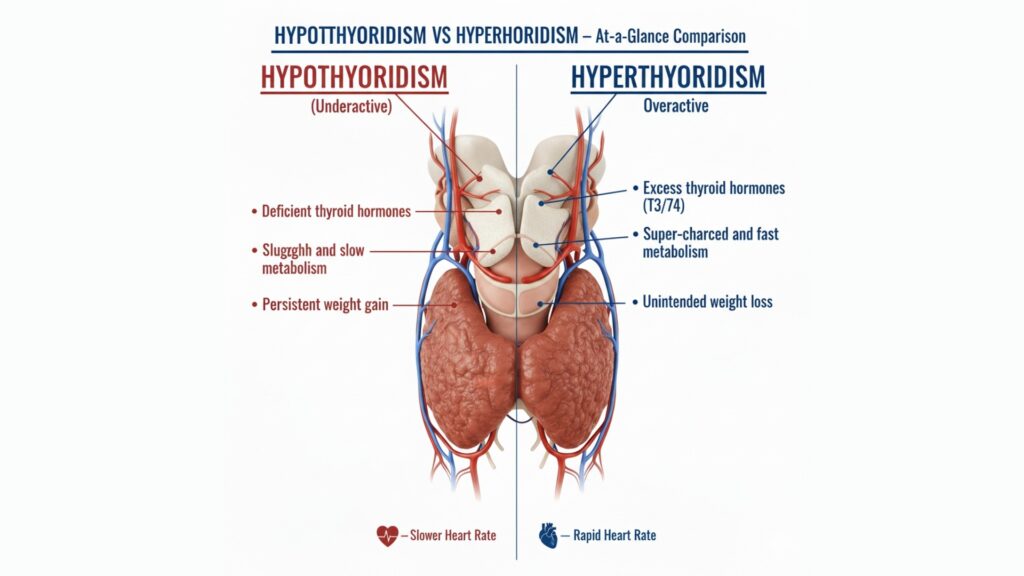
    At-a-Glance Comparison

    FeatureHyperthyroidism (Overactive)Hypothyroidism (Underactive)
    Hormone LevelsExcess thyroid hormones (T3/T4)Deficient thyroid hormones
    Metabolism SpeedSuper-charged and fastSluggish and slow
    Weight ChangesUnintended weight lossPersistent weight gain
    Heart RateRapid, racing, or poundingSlower than normal
    Energy LevelsRestless, anxious, or “wired.”Chronic fatigue and lethargy

    Causes of Hyperthyroidism

    Understanding the cause of hyperthyroidism is like finding out why your car’s cruise control is stuck on high. It’s rarely just one thing; usually, an underlying trigger is telling your thyroid to ignore the “stop” signals from your brain. 

    While lifestyle factors like high stress can certainly play a role in how you feel, most cases stem from specific medical conditions that force the gland into overdrive.

    Knowing what is happening behind the scenes helps you move away from just treating symptoms and toward addressing the root issue. Here are the most common factors that act as a cause of hyperthyroidism:

    • Graves’ Disease: This is the leading culprit. It’s an autoimmune disorder where your immune system attacks the thyroid, mistakenly causing it to produce way too much hormone.
    • Thyroid Nodules: Sometimes, small lumps (nodules) grow on the gland. While usually non-cancerous, these lumps can start acting independently, pumping out extra hormones on their own.
    • Excess Iodine Intake: Your thyroid uses iodine to make hormones. However, getting too much of certain medications or supplements can trigger the gland to over-produce.
    • Inflammation of the Thyroid: Also known as thyroiditis, this happens when the gland becomes inflamed, causing stored thyroid hormones to “leak” out into your bloodstream all at once.

    Causes of Hypothyroidism

    If hyperthyroidism is an engine revving too high, hypothyroidism is what happens when the fuel line is pinched. Understanding what causes hypothyroidism is essential because the treatment often depends on why the gland slowed down in the first place. For many, it isn’t just a “lazy” thyroid; it is often a response to an internal or external trigger that has disrupted the gland’s ability to do its job.

    While lifestyle factors like chronic stress can certainly aggravate the situation, most cases of an underactive thyroid stem from these common underlying reasons:

    • Hashimoto’s Thyroiditis: This is an autoimmune condition and the leading what causes hypothyroidism in many regions. Your immune system mistakenly attacks the thyroid tissue, leading to chronic inflammation and reduced hormone production.
    • Iodine Deficiency: Your thyroid needs iodine to manufacture hormones. While less common in some areas due to iodized salt, a lack of this mineral in your diet can cause the thyroid to struggle and eventually enlarge.
    • Thyroid Surgery: If a portion (or all) of the thyroid gland is removed to treat nodules, cancer, or hyperthyroidism, the remaining tissue may not be able to produce enough hormones for the body’s needs.
    • Certain Medications: Some drugs used for heart conditions, psychiatric disorders, or even cancer can interfere with how your thyroid produces or releases hormones.

    Symptoms That Need Immediate Attention

    While many thyroid issues develop slowly, some signs act like a “check engine” light that you simply shouldn’t ignore. Because your thyroid regulates vital functions like your heart rate and body temperature, a sudden shift can put a lot of strain on your system. If your body is sending out loud distress signals, it’s time to listen.

    Pay close attention if you notice a combination of these warning signs, as they often indicate that your hormone levels are significantly out of balance. In rare cases, more serious conditions such as those associated with thyroid lymphoma symptoms can also present with rapidly worsening swelling in the neck, difficulty swallowing or breathing, or unexplained hoarseness.

    Red Flags You Shouldn’t Ignore

    • Severe Fatigue: This isn’t just a mid-afternoon slump. We’re talking about an overwhelming, bone-deep exhaustion that prevents you from performing basic daily tasks.
    • Heart Palpitations: If you feel like your heart is fluttering, skipping beats, or racing while you are resting, take note. Many people wonder, does hyperthyroidism cause high blood pressure? The answer is yes; the extra strain on your heart can lead to elevated pressure and a rapid pulse.
    • Swelling in the Neck: Any visible enlargement at the base of your neck (often called a goitre) needs a professional look. While people often associate it with an overactive gland, you can actually develop a goitre with hypothyroidism as the gland swells while trying desperately to keep up with demand.
    • Sudden Mood Changes: While everyone has bad days, extreme shifts into intense anxiety, panic attacks, or deep, dark depression can be a direct result of thyroid hormones affecting your brain chemistry.

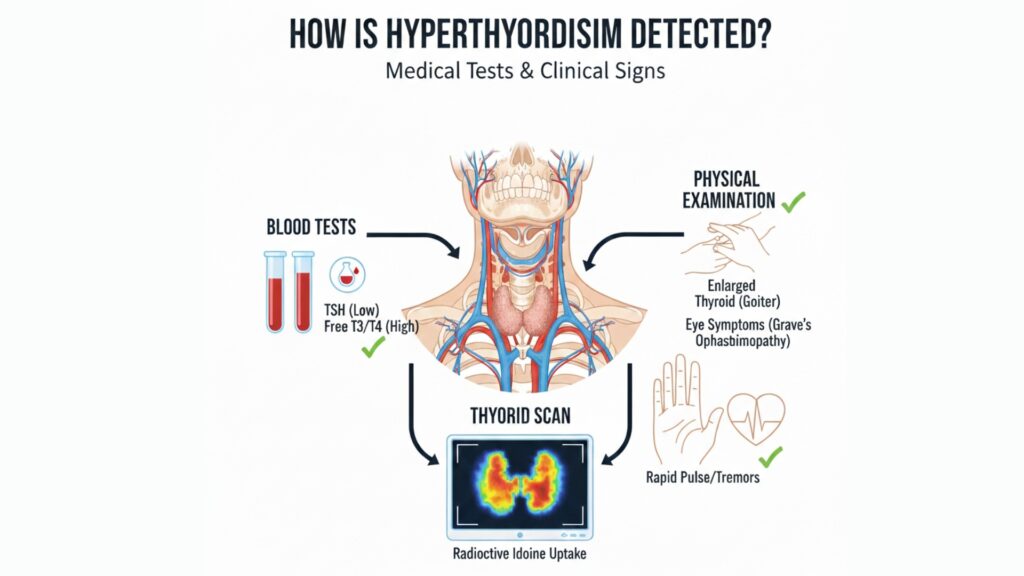
    How Is Hyperthyroidism Detected?

    If you suspect your metabolism is running too fast, you don’t have to keep guessing. Finding out how to detect hyperthyroidism is a straightforward process that usually starts with a simple conversation with your doctor about how you’ve been feeling. 

    Because the symptoms can mimic stress or caffeine sensitivity, medical professionals use a specific set of tools to see exactly what is happening with your hormone production.

    The sooner you get these tests done, the faster you can stop the racing heart and jittery feelings. Here are the primary ways doctors confirm an overactive thyroid:

    MethodWhat It Checks
    Blood TestsMeasures levels of TSH, T3, and T4 to see if hormones are too high.
    Thyroid ScanUses a small amount of radioactive iodine to see how the gland is functioning.
    Physical ExamChecks for tremors, skin changes, or a swollen thyroid gland.

    Diagnostic Steps for Hyperthyroidism

    Key medical evaluations are used to accurately identify an overactive thyroid.

    Diagnostic StepDescription
    Blood Tests (TSH, T3, T4)The gold standard for detecting hyperthyroidism. A low TSH level combined with high T3 or T4 levels usually confirms that the thyroid is overactive.
    Thyroid ScanAn imaging test that shows the size and shape of the thyroid and helps identify nodules responsible for excess hormone production.
    Physical ExaminationThe doctor checks for signs such as a rapid pulse, moist skin, or bulging eyes, which are common indicators of certain thyroid conditions.

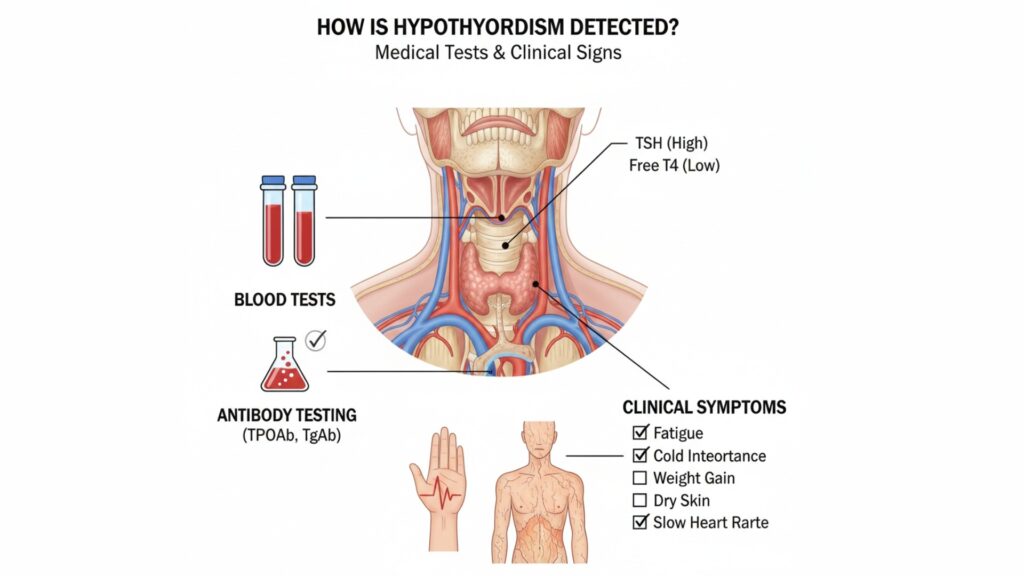
    How Is Hypothyroidism Detected?

    Finding out if your metabolism has slowed down follows a similar path to checking for an overactive thyroid, but the results tell a very different story. If you’ve been feeling sluggish or struggling with persistent brain fog, knowing how to detect hypothyroidism starts with a simple screening process. Because the symptoms often overlap with general stress or aging, medical tests are the only way to get a definitive answer.

    Doctors look for specific markers that show your thyroid is struggling to keep up with your body’s demands. Here is the standard process for uncovering an underactive thyroid:

    Detection MethodWhat It MeasuresWhy It Matters
    TSH Blood TestThyroid-stimulating hormone levelsHigh TSH indicates your brain is “screaming” at your thyroid to work harder.
    Antibody TestingPresence of specific immune proteinsHelps determine if an autoimmune issue like Hashimoto’s is the cause.
    Symptom EvaluationPhysical and mental health changesConnects lab numbers to your real-world experience, like fatigue or cold skin.

    The Screening Process for Hypothyroidism

    A step-by-step guide to the tests and evaluations doctors use to detect an underactive thyroid accurately.

    Screening StepDescription
    TSH Blood TestThe most common first test. High TSH levels indicate that the brain is signaling the thyroid to produce more hormones. This is the primary method to accurately detect hypothyroidism.
    Antibody TestingChecks for specific antibodies to determine if an autoimmune condition, such as Hashimoto’s disease, is causing thyroid dysfunction.
    Symptom EvaluationA review of physical signs like slow heart rate, dry skin, or thinning hair. This helps the doctor understand how hormone deficiency affects daily life, complementing blood test results.

    Natural & Holistic Perspective on Thyroid Balance

    While medical testing is the first step in identifying hyperthyroidism vs hypothyroidism, many people find that supporting their body holistically makes a world of difference in how they feel day-to-day. Your thyroid is incredibly sensitive to the world around you. 

    This means that while it can be easily thrown off balance, it also responds beautifully to gentle, consistent care through lifestyle and nutrition. Many individuals begin exploring natural remedies for thyroid support as a complementary approach alongside proper medical guidance.

    The goal of a holistic approach isn’t to replace medical advice, but to create an environment where your thyroid doesn’t have to work so hard. By focusing on the root of your daily habits, you can often ease the intensity of your symptoms and improve your overall quality of life.

    Supporting Your Thyroid Naturally

    • Mindful Nutrition: Your thyroid relies on specific minerals like selenium and zinc to function optimally. Incorporating whole, nutrient-dense foods and avoiding highly processed sugars that cause energy crashes can help keep your metabolism steady. If you’re looking for how to fix an underactive thyroid naturally, focusing on an anti-inflammatory diet for Thyroid, mineral-rich foods is a powerful first step.
    • Stress Management: The “stress hormone” cortisol has a direct conversation with your thyroid. When you are constantly in “fight or flight” mode, your thyroid often takes a backseat. Practices like deep breathing, walking in nature, or consistent sleep can help signal to your body that it’s safe to find balance again.
    • Early Awareness: The most “natural” thing you can do is listen to your body’s whispers before they become screams. Paying attention to small changes in your skin, hair, or mood allows you to make adjustments early on.
    • Gentle Movement: For those with hyperthyroidism, calming exercises like yoga can help soothe a racing system. For those with hypothyroidism, consistent, low-impact movement can help give a sluggish metabolism a much-needed spark.

    Who to Consult for Hyperthyroidism and Hypothyroidism

    When managing the complexities of thyroid health, it is often beneficial to take a collaborative approach to your care. While an endocrinologist is the conventional specialist for hormonal imbalances, many people in Alberta seek out a natural health practitioner to address the lifestyle and nutritional foundations that support long-term recovery. 

    These practitioners focus on the “whole person” by evaluating how stress, gut health, and mineral deficiencies might be aggravating your symptoms. If you are looking for a personalized strategy that combines clinical insight with holistic wellness, exploring Natural Treatments for Thyroid in Calgary can provide you with the tools to manage your energy and metabolism more effectively alongside your standard medical checkups.

    Conclusion

    Understanding the tug-of-war between hyperthyroidism vs hypothyroidism is the first step toward feeling like yourself again. Whether your body is moving too fast or stalled in low gear, these symptoms are just your thyroid’s way of asking for help. 

    By paying attention to the “red flags,” knowing how to detect issues early, and supporting your body through healthy habits, you can bring your life back into a healthy balance.

    FAQS

    Can thyroid disorders affect blood pressure?

    Yes, both conditions can impact your readings. Hyperthyroidism often causes a racing heart and can lead to high blood pressure, while hypothyroidism can sometimes cause your blood pressure to rise as your heart works harder to pump blood through stiffened vessels.

    Are thyroid conditions more common in women?

    Statistically, yes, thyroid conditions are significantly more common in women, more likely than men to develop thyroid issues, especially following pregnancy or during menopause. This is why being aware of the symptoms that women frequently report is so important for early detection.

    Can lifestyle changes help manage symptoms?

    Yes, consistent lifestyle changes can significantly help manage, reduce, and sometimes even reverse symptoms of chronic conditions like diabetes, heart disease, and mental health disorders.
  • How to Detoxification of Body: The Complete Guide to Natural Rejuvenation

    How to Detoxification of Body: The Complete Guide to Natural Rejuvenation

    “The natural healing force within each of us is the greatest force in getting well.” This famous quote by Hippocrates perfectly sets the stage for what we’re talking about today. Are you feeling a bit sluggish lately? Maybe your skin looks dull, or your energy hits a wall by 2:00 PM? It’s easy to feel like your system is just “clogged up” from the daily grind. 

    Between processed snacks, city smog, and that third cup of coffee, our bodies take a lot of hits. But here is the good news: your body is already a master at cleaning itself out; sometimes it just needs a little bit of help to get back on track.

    If you’ve been searching for how to detoxification of body, you’ve probably seen some pretty wild “miracle” cures online. But true restoration isn’t about starving yourself or drinking weird potions for weeks. It’s about making smart, simple choices that support your liver, kidneys, and gut health

    In this guide, we are going to skip the fluff and look at practical, safe ways to hit the reset button. Whether you are searching for how to detoxification of body through an at-home cleanse or just want to build better daily habits, we’ve got you covered. Ready to feel lighter and more energized? Let’s dive in.

    What Is Body Detoxification?

    At its core, detoxification is simply the process of resting, cleaning, and nourishing the body from the inside out. By removing and eliminating toxins, then feeding your body with healthy nutrients, detoxifying can help protect you from disease and renew your ability to maintain optimum health. Detoxification Therapy provides a structured approach to support these natural cleansing processes, helping your body function at its best.

    But here’s the secret: your body isn’t just waiting for a green juice to start working. You are a 24/7 detoxing machine! Your system has high-tech “filtration centers” that work nonstop to keep you clean. Pairing Detoxification Therapy with an anti-inflammatory diet can enhance these effects by reducing stress on your organs and helping your body efficiently rid itself of toxins in the body naturally.

    How Your Body Cleanses Itself

    To understand how to help, you first need to know who the “cleaning crew” is:

    • The Liver: This is your primary filter. It identifies toxic substances and converts them into harmless material or ensures they are released from the body.
    • The Kidneys: These powerhouses constantly filter your blood to remove waste and excess water through urine.
    • The Colon: Also known as the large intestine, its job is to flush out solid waste so it doesn’t sit in your system.
    • The Lymphatic System: Think of this as your body’s drainage system; it helps move “trash” out of your tissues and into the bloodstream to be filtered.

    The Goal of a Body Detoxification Cleanse

    While your body is great at its job, our modern world is a bit overwhelming. Between processed foods and environmental pollutants, your “filters” can get backed up. 

    A body detoxification cleanse is a focused period where you reduce the “toxic load” you put into your body while eating foods that give these organs a helping hand.

    Key areas a cleanse focuses on:

    • Liver detoxification: Using specific nutrients to help the liver process fat-soluble toxins.
    • Colon cleansing: Boosting fiber intake to “sweep” the digestive tract, a crucial step in any natural colon cleanse.
    • Blood purification: Drinking plenty of water to help kidneys clear the bloodstream.
    • Skin detox: Using sweat and movement to clear out pores and improve circulation.

    Signs You May Need a Body Detox

    Ever feel like your body is trying to send you a text message, but you just can’t read it? Sometimes, the signs that you need a body cleanse and detox are subtle, while other times they are loud and clear. 

    If you’ve been feeling “off” lately, your system might be struggling to keep up with its natural cleaning duties.

    How do you know it’s time to learn how to detox your body? Look out for these common red flags:

    • Constant Fatigue: Do you wake up tired even after eight hours of sleep? When your liver is overworked, it can drain your overall energy.
    • Bloating and Digestive Discomfort: If you feel “puffy” or uncomfortable after every meal, your gut might be signaling that it’s backed up.
    • Poor Skin Health: Breakouts, rashes, or a dull complexion often mean your body is trying to push toxins out through your skin because other pathways are overloaded.
    • Brain Fog: Struggling to focus or feeling “cloudy” can be a sign of systemic inflammation that a detox can help clear.
    • Irregular Bowel Movements: If things aren’t moving along daily, those toxins are just sitting in your colon, getting reabsorbed into your system.
    • Unexplained Cravings: Finding yourself stuck in a loop of sugar and salt? A quick reset can help kill those cravings and fix your palate.

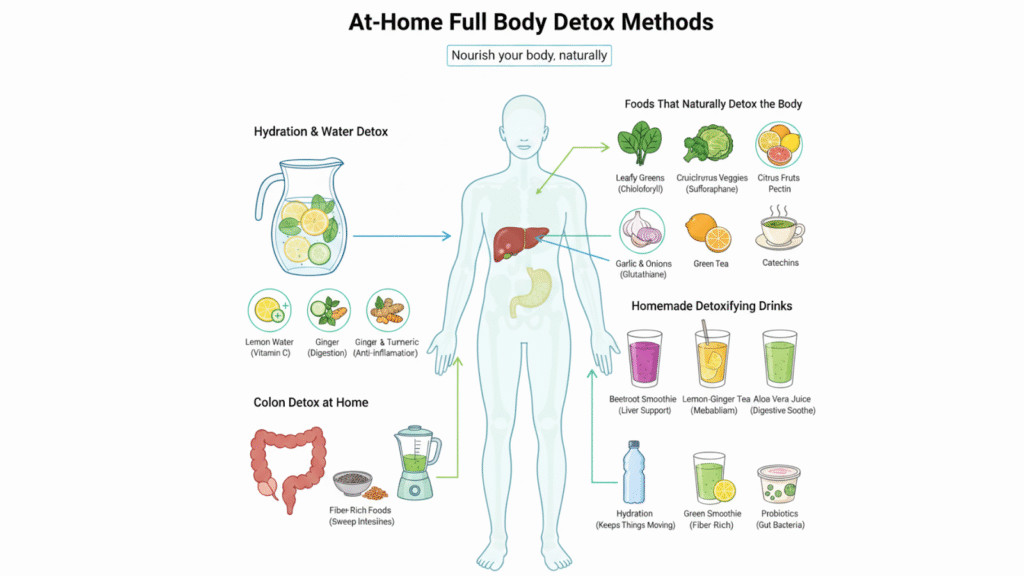
    At-Home Full Body Detox Methods

    You don’t need a massive budget or a week-long retreat to hit the reset button. In fact, some of the most powerful ways to support your health happen right in your kitchen. 

    Choosing a safe, at-home full-body detox cleanse is all about using natural ingredients to nudge your body’s systems in the right direction.

    Hydration & Water Detox

    Water is the ultimate fuel for your internal cleaning crew. It flushes waste from your cells and keeps your kidneys filtering efficiently. If plain water feels boring, a water cleanse detox is a tasty way to stay on track.

    Knowing how to make water detox drinks is simple: just infuse your water with fresh ingredients and let them sit for a few hours.

    • Lemon Water: Helps balance your body’s pH and provides a quick Vitamin C boost.
    • Cucumber & Mint: A refreshing blend that aids digestion and cools inflammation.
    • Ginger & Turmeric: This powerful duo acts as a natural anti-inflammatory “fire extinguisher” for your system.

    Foods That Naturally Detox the Body

    What you eat is either clogging your pipes or clearing them. To master a body detoxification cleanse, you should fill your plate with foods that detox naturally. These ingredients provide the specific enzymes and fiber your organs need to thrive.

    • Leafy Greens (Spinach, Kale): These are rich in chlorophyll, which helps clear the blood of environmental toxins.
    • Cruciferous Vegetables: Broccoli and cabbage contain sulforaphane, which supports the liver’s phase II detox process.
    • Garlic and Onions: These sulfur-rich foods help your body produce glutathione, the “master antioxidant.”
    • Citrus Fruits: Lemons and grapefruits are high in pectin and Vitamin C, which help improve gut health and the liver.
    • Green Tea: Packed with catechins, this drink helps speed up liver activity.

    Homemade Detoxifying Drinks

    If you’re on the go, homemade detoxifying drinks like smoothies and teas are the perfect way to pack in nutrients. These recipes are specifically designed to support a liver and body detox by providing liquid nutrition that is easy for your body to absorb. If you’re looking for simple ways on how to detox liver naturally at home, these drinks are a great place to start.

    • Beetroot Smoothie: Beets are the liver’s best friend; they help thin the bile so it flows more freely.
    • Lemon-Ginger Tea: A warm, soothing way to kickstart your metabolism in the morning.
    • Aloe Vera Juice: Known for its “slippery” properties, it helps soothe the digestive lining.
    • Green Smoothies: Blend spinach, green apple, and celery for a fiber-rich glass of liquid gold.

    Colon Detox at Home

    A colon detox at home doesn’t require any invasive procedures. The goal is to keep things moving so waste doesn’t linger. A healthy colon means a flatter stomach and a much happier mood!

    • Fiber-Rich Foods: Think chia seeds, flaxseeds, and lentils to “sweep” the intestinal walls.
    • Hydration: Without water, fiber can actually cause more backup, so keep that water bottle handy!
    • Probiotics: Foods like yogurt or kefir introduce “good” bacteria that break down waste more effectively.

    10-Day Detox Diet Plan (A Structured Approach)

    If you feel like your body needs more than just a “light refresh,” a structured 10-day detox diet might be exactly what you need. Think of this as a ten-day contract between you and your health. 

    It’s not about starvation; it’s about removing the “noise” of processed sugars, caffeine, and alcohol so your natural systems can finally catch up.

    How the 10-Day Reset Works

    The goal here is to flood your system with nutrients while giving your digestive tract a well-deserved break. During these ten days, you’ll focus on whole, single-ingredient foods that support a body cleanse and detox.

    A Typical Day on the Plan:

    Time of DayMeal / ActivityBenefits
    MorningWarm lemon water + Green smoothie (spinach, chia, apple)Wakes up the liver and provides a massive dose of fiber and antioxidants.
    Lunch“Rainbow” salad with leafy greens, beets, and chickpeasProvides phytonutrients and lean protein to support liver and body detox.
    AfternoonGinger tea + A handful of raw walnuts or almondsAnti-inflammatory boost that keeps cravings away until dinner.
    DinnerSteamed broccoli or bok choy with quinoa or sweet potatoEasy-to-digest complex carbs and greens that support your colon detox at home.
    EveningA cup of calming chamomile teaCalms the nervous system, preparing the body for its nighttime repair cycle.

    Tips for Success

    To get the most out of your at-home full-body detox cleanse, you need to look beyond just what is on your plate. Small lifestyle tweaks can make a massive difference in how you feel by day ten.

    TipAction ItemWhy It Works
    Keep it SimpleEat whole, single-ingredient foods.Reduces the chemical load on your liver.
    Move Your Body20-minute walk or light yoga.Pumps the lymphatic system to remove waste.
    Prioritize SleepAim for 7–9 hours per night.Allows the brain to “self-clean” via the glymphatic system.
    Stay HydratedDrink 2–3 liters of water cleanse and detox.Flushes toxins through the kidneys and skin.
    BreathworkPractice deep belly breathing.Helps the lungs expel gaseous waste and reduces stress.

    By the end of the ten days, most people report feeling lighter, thinking more clearly, and having a natural energy that no cup of coffee can match!

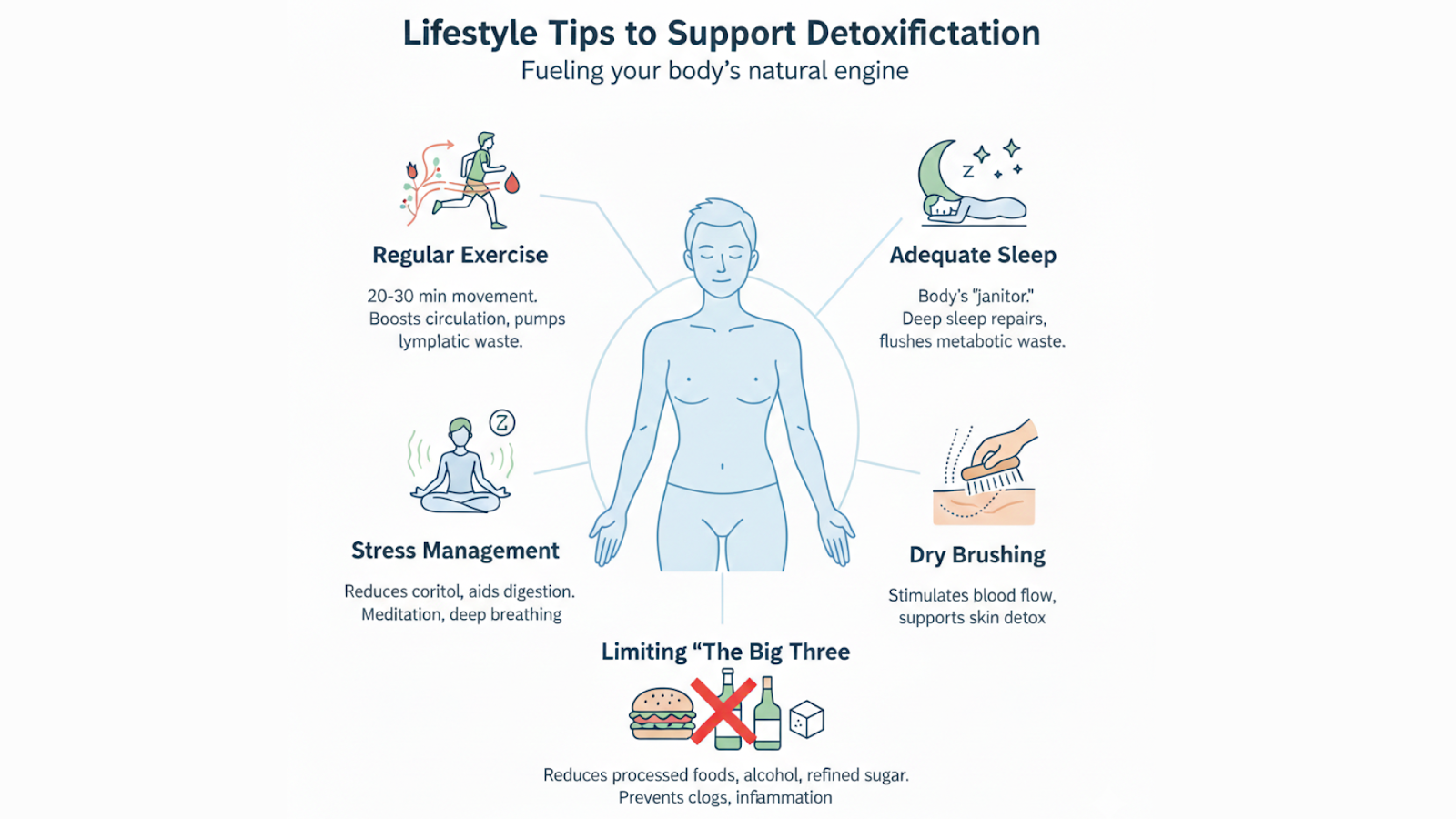
    Lifestyle Tips to Support Detoxification

    While what you put in your mouth is vital, your lifestyle habits act as the “engine” that drives a successful body cleanse and detox. Incorporating lifestyle counseling can help you identify habits that support your body’s natural detox processes and make sustainable changes.

    If you are eating clean but staying stressed and sedentary, your body’s filtration system can’t run at full speed.

    To get the best results, try incorporating these simple daily habits:

    • Regular Exercise: You don’t need to run a marathon! Just 20–30 minutes of movement boosts circulation and helps your lymphatic system pump out waste that doesn’t move on its own.
    • Adequate Sleep: Think of sleep as your body’s “janitor.” During deep sleep, your brain and cells undergo a repair process that flushes out metabolic waste accumulated during the day.
    • Stress Management: When you are stressed, your body produces cortisol, which can stall your digestion. Simple practices like meditation or deep breathing exercises tell your body it is safe to focus on healing.
    • Limiting “The Big Three”: To truly help your system, try to reduce or eliminate processed foods, alcohol, and refined sugar. These are the primary items that clog your filters and lead to inflammation.
    • Dry Brushing: This old-school technique involves brushing your skin with a natural bristle brush to stimulate blood flow and support a skin detox.

    Your Daily Detox Schedule

    To help you stay on track, here is a simple breakdown of a typical day during your 10-day detox diet. This schedule is designed to keep your energy high while giving your digestive system the rest it needs.

    Time of DayMeal / ActivityBenefits
    MorningWarm lemon water + Green smoothie (spinach, chia, apple)Wakes up the liver and provides a massive dose of fiber and antioxidants.
    Lunch“Rainbow” salad with leafy greens, beets, and chickpeasProvides phytonutrients and lean protein to support liver and body detox.
    AfternoonGinger tea + A handful of raw walnuts or almondsAnti-inflammatory boost that keeps cravings away until dinner.
    DinnerSteamed broccoli or bok choy with quinoa or sweet potatoEasy-to-digest complex carbs and greens that support your colon detox at home.
    EveningA cup of calming chamomile teaCalms the nervous system, preparing the body for its nighttime repair cycle.

    Quick Tips for a Successful Detox

    TipAction ItemWhy It Works
    Keep it SimpleEat whole, single-ingredient foods.Reduces the chemical load on your liver.
    Move Your Body20-minute walk or light yoga.Pumps the lymphatic system to remove waste.
    Prioritize SleepAim for 7–9 hours per night.Allows the brain to “self-clean” via the glymphatic system.
    Stay HydratedDrink 2–3 liters of water cleanse and detox.Flushes toxins through the kidneys and skin.
    BreathworkPractice deep belly breathing.Helps the lungs expel gaseous waste and reduces stress.

    Safety Considerations & Myths About Detoxing

    Before you jump into your new routine, let’s clear the air. There is a lot of noise out there about how to detoxify the body, and unfortunately, some of it can be more harmful than helpful. 

    A true body detoxification cleanse should make you feel stronger and more vibrant, not weak, shaky, or miserable.

    Busting Common Detox Myths

    Don’t fall for these common misconceptions that often do more harm than good:

    • Myth: You have to starve yourself.
      Truth: Your liver actually requires nutrients (like amino acids and vitamins) to process toxins. If you don’t eat, your detox organs can’t do their jobs!
    • Myth: “Detox Teas” are all you need. 
      Truth: Many “skinny teas” are just glorified laxatives. Real detoxification comes from supporting your organs with hydration and whole foods, not from quick-fix bathroom trips.
    • Myth: Extreme fasting is the only way.
      Truth: While intermittent fasting can be helpful, extreme or unsupervised long-term fasts can stress your body and lead to muscle loss.

    Listen to Your Body

    Detoxification is a natural process, not a race. If you experience severe headaches, extreme dizziness, or intense nausea, your “at-home full body detox cleanse” might be too aggressive.

    A Peer Note: Always consult with a healthcare professional before starting any new diet or detox program, especially if you have underlying health conditions, are pregnant, or are taking medication. A safe detox is a sustainable one!

    Your Daily Detox Schedule

    To help you stay on track, here is a simple breakdown of a typical day during your 10-day detox diet. This schedule is designed to keep your energy high while giving your digestive system the rest it needs.

    Time of DayMeal / ActivityBenefits
    MorningWarm lemon water + Green smoothie (spinach, chia, apple)Wakes up the liver and provides a massive dose of fiber and antioxidants.
    Lunch“Rainbow” salad with leafy greens, beets, and chickpeasProvides phytonutrients and lean protein to support liver and body detox.
    AfternoonGinger tea + A handful of raw walnuts or almondsAnti-inflammatory boost that keeps cravings away until dinner.
    DinnerSteamed broccoli or bok choy with quinoa or sweet potatoEasy-to-digest complex carbs and greens that support your colon detox at home.
    EveningA cup of calming chamomile teaCalms the nervous system, preparing the body for its nighttime repair cycle.


    Who to Consult for Safe and Effective Detoxification

    When seeking a professional to guide you through a safe and effective body cleanse and detox, it is essential to partner with experts who understand both medical science and holistic wellness. 

    Consulting a functional medicine doctor or a certified nutritionist ensures that your plan is tailored to your unique biology, helping you avoid the pitfalls of extreme fasting. 

    For those in Alberta, exploring specialized services like Calgary Detoxification therapy can provide access to medically supervised environments or holistic centers focused on organ support and lifestyle shifts. 

    One such sanctuary for wellness is the Natural Healing Haven, which focuses on restoring your body’s innate balance through gentle, evidence-based practices. 

    By working with a professional, you ensure that your journey remains a positive step toward vitality rather than a stressor on your system.

    Conclusion

    Learning how to detoxification of body isn’t about extreme measures, expensive kits, or starving yourself; it’s about returning to the basics and trusting your body’s incredible natural wisdom.

    By supporting your liver, kidneys, and gut with the right nutrients, consistent hydration, and mindful lifestyle habits, you allow your internal systems to do what they do best: heal, filter, and rejuvenate.

    Whether you start small with a simple homemade detoxifying drink each morning or commit to the structured approach of a 10-day detox diet, understanding the best methods for how to detoxification of body ensures the results speak for themselves. You’ll likely find yourself waking up with more clarity, moving with more ease, and enjoying a natural energy that no amount of caffeine can replicate.

    Remember, your health is a lifelong journey, not a quick weekend project. Start with one better choice today, stay consistent, and enjoy the feeling of a lighter, cleaner, and more vibrant version of yourself!

    FAQS

    How long does a typical body cleanse and detox take?

    The duration depends on your goals, but most people find success with a 10-day detox diet. A shorter 3-day reset can help reduce bloating, while a longer 10-day period allows your taste buds to reset and your energy levels to stabilize. Consistency in healthy habits matters more than the length of the program.

    Is it normal to feel tired while learning how to detox your body?

    Yes, it’s quite common to feel slightly tired or experience mild headaches during the first few days. As your body moves away from sugar and caffeine, it goes through a natural adjustment phase. This is a sign your system is recalibrating. Staying hydrated and getting enough rest can help ease this transition.

    Can I still eat solid food during an at-home full-body detox cleanse?

    Absolutely. Eating fiber-rich solid foods is often more effective than following a liquid-only cleanse. Leafy greens, cruciferous vegetables, and seeds support digestion by helping eliminate toxins naturally. A healthy detox focuses on nourishment, not restriction.

    How does a water cleanse detox actually help?

    A water cleanse supports kidney function by helping flush waste products such as urea and carbon dioxide from the bloodstream. Adding ingredients like lemon or ginger provides antioxidants that may reduce inflammation. Staying well-hydrated is one of the simplest ways to support your body’s natural detox system.

  • How to Detox Your Kidneys Naturally at Home

    How to Detox Your Kidneys Naturally at Home

    “The kidneys are the masters of the blood. They are the smart chemists who keep our internal environment pure.” — Dr. Homer W. Smith

    This powerful insight perfectly captures why your health starts with your filters. Your kidneys are your body’s personal filtration system, working 24/7 to pump out toxins and keep your minerals in balance. 

    But let’s be real: between processed snacks, extra salt, and not drinking enough water, these “smart chemists” can get overworked. When they slow down, you might feel sluggish, bloated, or just “off.”

    Learning how to detox your kidneys isn’t about some scary medical procedure or a chalky drink; it’s about supporting your internal chemistry with the right natural fuel. A kidney cleanse naturally refreshes your system, boosts your energy, and helps you feel lighter. 

    Instead of reaching for harsh chemicals, we’re looking at simple, kitchen-staple solutions to support kidney detoxification and overall gut health. Ready to hit the reset button on your health? Let’s dive into how you can start detoxifying your kidneys right from your own home.

    Why Kidney Detox Is Important

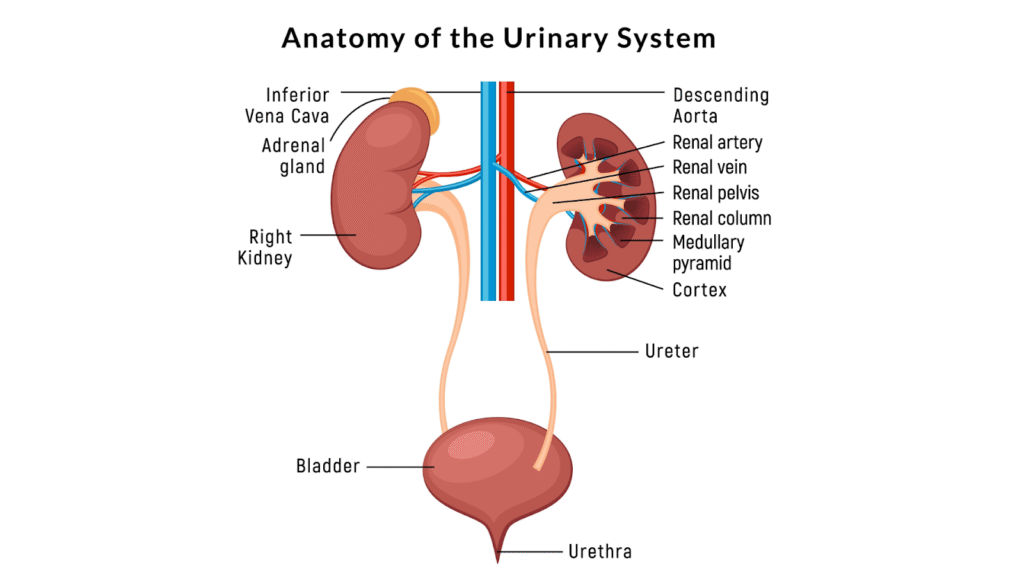
    Your kidneys are your body’s ultimate security system. Every single day, these two bean-shaped organs filter about 150 quarts of blood to remove waste and extra water. 

    They act as “smart chemists,” constantly regulating your fluids and balancing minerals like sodium and potassium. Without them, toxins would quickly build up in your bloodstream, leading to serious health issues.

    However, when your system is overloaded with processed sugar, salt, and dehydration, your kidneys experience stress. You might notice signs like:

    • Unexplained fatigue or feeling sluggish
    • Puffiness in the face, hands, or ankles (water retention)
    • Difficulty concentrating or “brain fog.”
    • Changes in how often you use the bathroom

    Supporting your kidney detoxification process isn’t just about avoiding illness; it’s about feeling your absolute best. When you focus on a kidney cleanse naturally, you unlock several health perks that ripple through your entire body.

    Benefits of Supporting Kidney Health:

    • Improved Toxin Removal: Helps your body flush out waste products more efficiently before they cause inflammation.
    • Better Energy Levels: When your blood is clean and your minerals are balanced, you stop feeling that midday “crash.”
    • Enhanced Digestion and Metabolism: A full body cleanse detox allows your metabolic processes to run more smoothly, reducing uncomfortable bloating.
    • Support for Blood Pressure Balance: Your kidneys play a leading role in managing blood pressure; keeping them clean helps keep your heart healthy, too.

    How to Detox Your Kidneys Naturally

    If you want to know how to detox your kidneys, you don’t need to look for a magic pill. The most effective kidney detoxification happens when you adjust your daily habits to support what your body already does best. 

    By making a few simple shifts at home, you can significantly lighten the load on your internal filters.

    Stay Hydrated

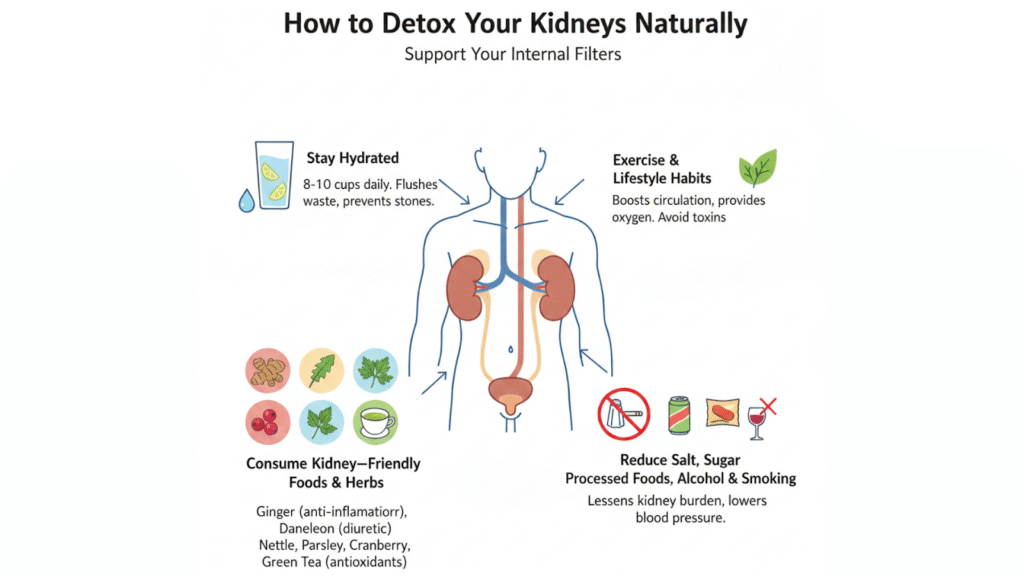
    Water is the ultimate tool for detoxifying the kidneys. Think of it as the carrier that picks up the trash (toxins) and hauls it out of your body. Without enough water, waste products can crystallize and form stones.

    • How much should you drink? For a solid kidney cleanse naturally, aim for about 8 to 10 cups of water daily. If you’re active or it’s a hot day, you’ll need even more to keep those filters flowing.

    Consume Kidney-Friendly Herbs and Foods

    Nature has provided a literal pharmacy of herbs for the kidneys that can help flush out excess uric acid and sodium. Adding these to your diet is a gentle way to support kidney detox natural processes:

    • Ginger: Many people ask, is ginger good for the kidneys? Yes! It is a powerhouse for reducing gut inflammation and protecting the kidneys from oxidative stress.
    • Dandelion Root: Acts as a natural diuretic, helping to increase urine flow and flush out waste.
    • Nettle Leaf: One of the most traditional kidney detox herbs, known for its ability to soothe the urinary tract.
    • Parsley: A natural “flusher” that helps reduce the buildup of toxins in the kidneys.
    • Cranberry: Famous for preventing bacteria from sticking to the bladder walls, which protects the entire system.
    • Green Tea: Packed with antioxidants that support overall detoxification and organ health.

    Reduce Salt, Sugar, and Processed Foods

    Your diet is the biggest factor in how hard your kidneys have to work. High salt intake forces the kidneys to hold onto more water, which spikes your blood pressure. 

    Similarly, too much refined sugar can lead to systemic inflammation. To clean kidneys effectively, swap out the packaged snacks for whole, fresh foods that don’t require your “internal chemists” to work overtime. Including fermented foods for gut health can further support kidney function by improving digestion and reducing the toxic load on your body.

    Exercise and Lifestyle Habits

    Moving your body is a key part of a full-body cleanse detox. Regular exercise improves blood circulation, ensuring your kidneys get the oxygen-rich blood they need to function. 

    Additionally, avoiding smoking and limiting alcohol is vital; these habits introduce heavy toxins that can cause long-term damage to the delicate vessels inside your kidneys.

    Supplements and Natural Remedies for Kidney Detox

    While whole foods are the foundation of any good health routine, sometimes your body needs a more concentrated boost. 

    Using the best supplements for the kidneys can help bridge the gap, providing the specific nutrients your “smart chemists” need to stay efficient. Supporting kidney function can also help the body maintain hormonal balance and treat estrogen dominance naturally by improving detox pathways.

    When looking at kidney detox natural options, focus on these key vitamins and minerals that specifically support filtration and protection:

    • Vitamin B6: This is a superstar for kidney health. It helps reduce the buildup of oxalates, which are common culprits in the formation of kidney stones.
    • Vitamin D: Your kidneys are responsible for activating Vitamin D in your body. Supplementing can support bone health and reduce inflammation when your kidneys are under stress.
    • Iron: Since kidneys help produce red blood cells, staying on top of your iron levels prevents the fatigue and anemia often linked to poor kidney function.
    • Omega-3 Fatty Acids: These healthy fats are great for detoxifying the kidneys because they lower inflammation and support healthy blood pressure.
    • Magnesium Citrate: A gentle mineral that helps prevent calcium from crystallizing in the kidneys, keeping your filters clear.

    Natural Remedies: The Magic of Herbal Teas

    If you aren’t a fan of pills, herbal teas are one of the oldest and most effective herbs for the kidneys. They provide hydration while delivering active plant compounds directly to your system. These herbal teas are some of the best Natural & Effective Remedies for a gentle kidney detox.

    • Dandelion Leaf Tea: A powerful natural diuretic that helps the body get rid of toxins in the body naturally while removing extra water, without leaching out important potassium.
    • Nettle Tea: Known for its ability to flush out metabolic waste and soothe the urinary tract.
    • Ginger and Turmeric Tea: A potent anti-inflammatory duo that protects kidney tissues from oxidative damage.
    • Cranberry Juice (Unsweetened): Helps maintain a clean urinary environment, preventing bacteria from causing stress to the kidneys.

    Important Note: Your kidneys are delicate. Always consult with a healthcare provider before starting new kidney detox herbs or supplements, especially if you have a history of kidney stones or existing medical conditions.

    Full Body Detox and Kidney Health

    True health doesn’t happen in a vacuum. Your organs work like a finely tuned orchestra, and the kidneys are the lead performers.

    A full body cleanse detox is only effective if your kidneys are functioning at their peak; otherwise, the toxins stirred up from other areas have nowhere to go.

    When you focus on how to detox your kidneys, you are essentially clearing the exit path for your entire body’s waste.

    The Liver-Kidney Power Duo

    If you want to know how to detox your liver and kidneys naturally at home, you have to understand their synergy. Adding simple habits and foods can help you detox the liver naturally at home while supporting kidney function.s

    The liver acts as a processing plant, breaking down complex toxins, while the kidneys act as the waste management team that flushes those toxins out through urine. If the liver is sluggish, the kidneys get overwhelmed with “unprocessed” waste.

    To support this duo, focus on bitter greens (like arugula) and antioxidants that protect both organs simultaneously. 

    By supporting your digestive and lymphatic systems alongside your kidneys, you ensure that toxins are moved out of the tissues and out of the body efficiently.

    Synergy for Total Detoxification

    SystemRole in DetoxBest Support Practice
    KidneysFilters blood & removes fluid wasteHigh water intake & kidney detox herbs
    LiverBreaks down chemicals & fatsBeets, cruciferous veggies, & milk thistle
    Digestive SystemEliminates solid wasteHigh fiber foods & probiotics
    Lymphatic SystemMoves immune fluid & cellular wasteDry brushing & regular daily movement

    By treating these systems as a team, you achieve a more thorough detoxification than just focusing on one organ alone.

    Signs Your Kidneys Are Healthier After a Detox

    After you’ve put in the work to focus on detoxifying your kidneys, how do you know if it’s actually working? Since you can’t see what’s happening inside those two small organs, you have to look for the “feedback” your body sends you. 

    When your internal filters are running smoothly, the changes are usually felt in your overall vitality and comfort.

    Here are the most common signs that your kidney cleanse naturally is a success:

    • Increased Energy: When your “smart chemists” aren’t bogged down by waste, your blood remains pure and oxygenated. This often results in a noticeable lift in your daily energy levels and the disappearance of that afternoon “brain fog.”
    • Clearer Urine: This is the most direct indicator. While dark or cloudy urine can signal concentrated waste, pale yellow and clear urine shows that your kidney detoxification process is working efficiently and your body is well-hydrated.
    • Better Hydration and Less Bloating: If you notice your rings fit better or your socks aren’t leaving deep indentations on your ankles, your kidneys are doing a great job regulating fluids. Reducing puffiness is a classic sign of a successful full-body cleanse detox, and one of the key benefits of using natural remedies for bloating to support fluid balance.
    • Improved Blood Pressure: Because the kidneys help control the volume of fluid in your blood vessels, a healthier system often leads to more stable and improved blood pressure readings.

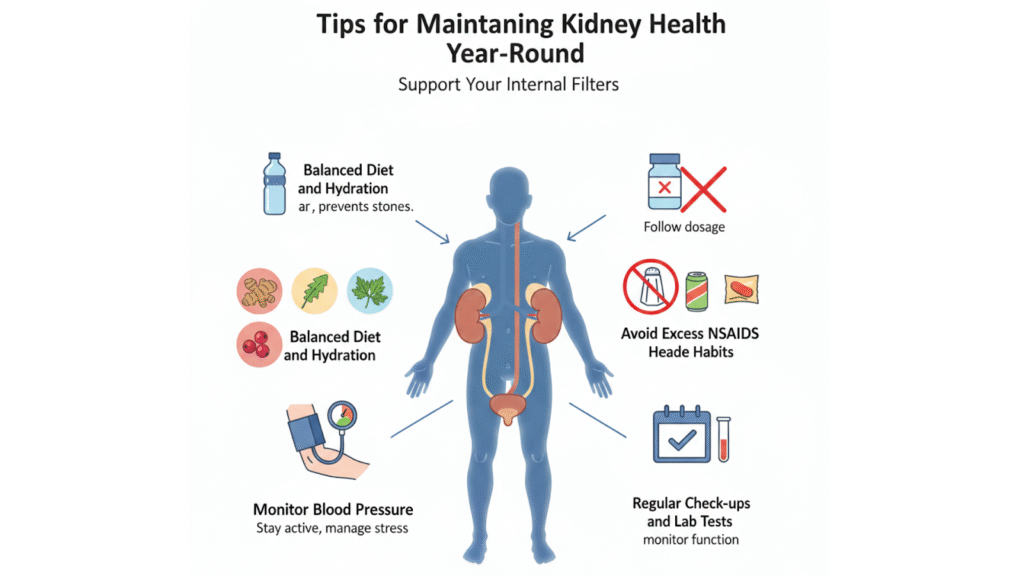
    Tips for Maintaining Kidney Health Year-Round

    Learning how to detox your kidneys is a fantastic start, but the real secret to vitality is consistency. You don’t want to just “fix” your filters once a year; you want to keep them running smoothly every single day. 

    By turning these simple tips into long-term habits, you ensure that your kidney detoxification happens naturally and effortlessly.

    Here is how you can protect your kidneys for the long haul:

    HabitWhy It MattersAction Step
    Smart HydrationFlushes out sodium and urea naturally.Drink 8–10 cups of water; add lemon or herbs for the kidneys.
    Mindful MedicationNSAIDs (ibuprofen) can reduce blood flow to the kidneys.Use painkillers sparingly and only as directed by a pro.
    Salt ControlHigh salt spikes blood pressure and stresses the filters.Swap table salt for kidney detox herbs like parsley and garlic.
    Blood Pressure CheckHigh pressure damages the small vessels in the kidneys.Maintain a 30-minute daily walk to keep circulation steady.
    Routine Lab WorkDetects “silent” changes in your filtration rate.Schedule an annual blood test to monitor your kidney function.

    Choosing the Right Expert for Kidney Detoxification

    While home remedies are a great starting point, complex cases often benefit from professional guidance to ensure your filtration system is supported safely.

    Consulting with a Natural Health Practitioner can provide you with a personalized roadmap that balances herbal support with your specific metabolic needs. For those seeking specialized local care, exploring options like Calgary Detoxification therapy can offer access to advanced wellness strategies and professional monitoring.

    Working with an expert ensures that your journey to clean kidneys is backed by evidence-based practices, helping you avoid the common pitfalls of unregulated “miracle” cures.

    Conclusion

    Taking care of your kidneys is one of the best investments you can make for your future self. From understanding that ginger is good for the kidneys to mastering the art of a kidney cleanse naturally, you now have the tools to hit the reset button on your health. 

    Remember, learning how to detox your kidneys isn’t about extreme measures or expensive kits; it’s about small, mindful choices that support your body’s natural rhythm.

    By staying hydrated, incorporating kidney detox herbs, and watching your salt intake, you are actively helping your “smart chemists” keep your internal environment pure. 

    Your kidneys work tirelessly every single day to keep you feeling your best; giving them a little extra love through detoxification is the best way to ensure you stay energized, de-bloated, and healthy for years to come.

    FAQS

    How long does it take to detox your kidneys?

    Most people begin to notice improved energy levels and reduced water retention within 3 to 7 days of starting a natural kidney cleanse. However, since your kidneys work continuously to filter your blood, detoxification is most effective when followed as a long-term lifestyle habit rather than a short-term solution.

    Is ginger good for the kidneys?

    Yes, Ginger is generally considered good for kidney health. It contains powerful anti-inflammatory compounds that help protect the kidneys from oxidative stress. Adding fresh ginger to tea or meals is a simple and effective way to support your body’s natural detox process at home.

    Can a kidney cleanse help with weight loss?

    A kidney detox does not directly burn body fat, but it can help reduce water retention. By improving how your kidneys eliminate excess sodium, a cleanse may reduce bloating and puffiness, helping you feel lighter and more comfortable.

    What are the best kidney detox herbs to use at home?

    Common natural remedies for kidney detox include dandelion root, parsley, nettle leaf, and marshmallow root. These herbs act as gentle diuretics, supporting the kidneys in flushing out waste and reducing mineral buildup that can contribute to kidney stones.

  • Red Dragon Fruit Benefits: Nutritional Value and Health Advantages

    Red Dragon Fruit Benefits: Nutritional Value and Health Advantages

    “Health is a relationship between you and your body.” — Terri Guillemets

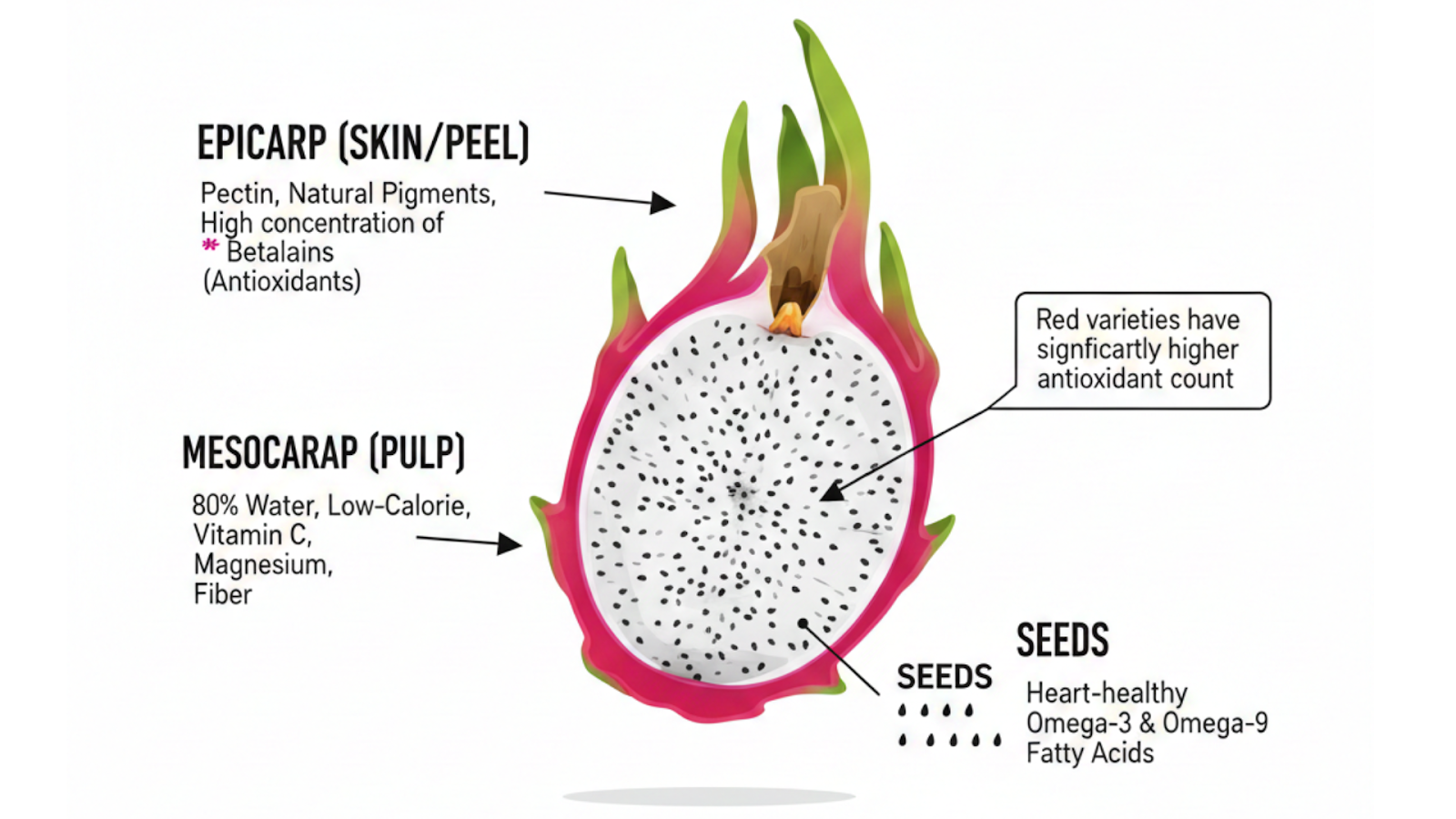
    This couldn’t be truer than when you first set eyes on a red dragon fruit. With its vibrant red flesh, packed with betalains, which help reduce inflammation, strengthen the immune system, promote healthy skin, and support heart health, scale-like skin and deep crimson flesh, this tropical gem, often called pitaya, is more than just a centerpiece for a fruit bowl. 

    While the white-fleshed variety is common, the red and pink dragon fruit types are the true heavyweights in the world of nutrition. These intensely colored varieties are packed with a higher concentration of antioxidants, offering a potent punch that their paler counterparts simply can’t match.

    Integrating this fruit into your diet isn’t just about adding a splash of color to your plate; it’s about nurturing that vital connection with your body through a unique profile of vitamins and minerals. 

    Whether you call it pitaya dragon fruit or simply dragon fruit, the health advantages are backed by a dense nutritional architecture. From supporting your immune system to enhancing gut health and skin health, the red dragon fruit benefits stem from a complex mix of phytonutrients that work silently to optimize your well-being.

    Nutritional Value of Pitaya: What is Inside a Dragon Fruit?

    When you slice inside a dragon fruit, the vibrant magenta hue isn’t just for show; it is a visual indicator of its immense health potential. This deep pigment in the red and pink varieties comes from betalains, which are powerful antioxidants known for their ability to protect cells from oxidative stress. 

    Unlike many other tropical fruits, the nutritional value of pitaya offers a unique blend of essential micronutrients and bioactive compounds that support everything from heart health to immune function.

    The dragon fruit nutrition data reveals a remarkably dense profile for such a refreshing fruit. If you are tracking your intake and wondering how many calories you are consuming, you’ll be pleased to find it is a low-calorie, high-impact food, typically containing roughly 60 calories per 100g. 

    Despite its light caloric footprint, the dragon fruit nutritional info highlights significant levels of Vitamin C for skin vitality, iron for energy production, and magnesium for muscle function. 

    This combination ensures that the dragon fruit’s nutritional value remains a top choice for those seeking maximum nourishment with every bite.

    The Biological Advantages of Dragon Fruit (Pitaya)

    The systemic advantages of dragon fruit extend far beyond simple vitamins; they offer a biological shield for the body. By regularly consuming this vibrant fruit, you are providing your immune system with the essential tools it needs to function at its peak. 

    The high concentration of Vitamin C and carotenoids found in the pitaya dragon fruit helps stimulate white blood cell production, which is your body’s primary line of defense against infection.

    Furthermore, the red dragon fruit benefits include a significant reduction in systemic oxidative stress. Because the red variety is so rich in polyphenols and betacyanins, it effectively scavenges free radicals that can cause cellular damage over time. 

    This antioxidant activity not only supports longevity but also helps manage inflammation throughout the body, making it a functional food choice for long-term vitality.

    Dragon Fruit Pitaya Benefits for Gut Health

    A healthy body begins in the core, and the dragon fruit pitaya benefits for the digestive system are particularly impressive. In fact, among the many fruits good forgut health, dragon fruit stands out due to its unique prebiotic fiber content.

    While many fruits provide standard fiber, the flesh and the tiny black seeds found inside a dragon fruit serve as a specialized food source for the beneficial bacteria in your gut, such as Lactobacilli and Bifidobacteria.

    By nourishing these “good” microbes, the fiber helps promote a balanced and flourishing microbiome. This doesn’t just improve digestion and regularity; it also enhances nutrient absorption and strengthens the gut barrier. 

    Incorporating the nutritional value of pitaya into your morning routine ensures that your digestive tract remains efficient and your metabolic health stays on track.

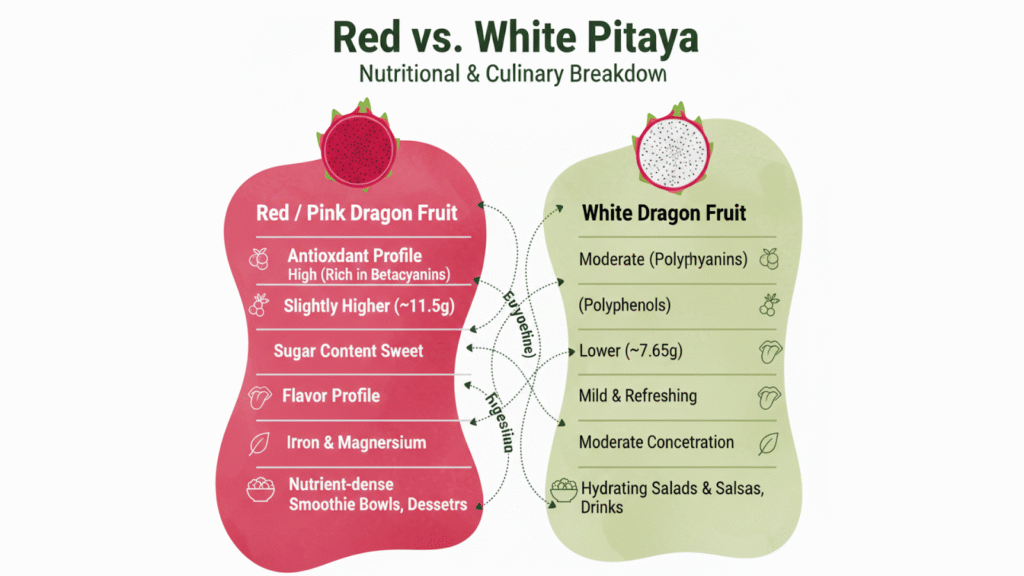
    Comparing Dragon Fruit Varieties: Red vs. White

    While all varieties of this tropical fruit are health-conscious choices, the dragon fruit red variety holds a clear nutritional edge over the more common white-fleshed type. 

    The most striking difference lies in the antioxidant capacity. The deep crimson or pink dragon fruit flesh is saturated with betacyanins, a specific class of antioxidants not found in the white variety. 

    These compounds provide superior protection against cellular damage and have been linked to improved cardiovascular health and reduced inflammation.

    When analyzing the dragon fruit nutritional value, it is important to note that the red variety typically offers a more robust flavor profile. 

    Because it is more nutrient-dense in terms of phytonutrients, it also carries a slightly higher natural sugar content than the white version. 

    However, this small trade-off is often considered worthwhile by nutritionists, as the concentrated red dragon fruit benefits and the sheer volume of health-protective pigments far outweigh the minor difference in sweetness.

    Quick Comparison: Red vs. White Pitaya

    To help you decide which variety fits your goals, here is a breakdown of how they stack up side-by-side:

    FeatureRed / Pink Dragon FruitWhite Dragon Fruit
    Antioxidant ProfileHigh (Rich in Betacyanins)Moderate (Polyphenols)
    Sugar ContentSlightly Higher (~11.5g per 100g)Lower (~7.65g per 100g)
    Flavor ProfileSweet & EarthyMild & Refreshing
    Iron & MagnesiumHigher ConcentrationModerate
    Best UseNutrient-dense Smoothie BowlsHydrating Salads & Salsas

    Choosing the red variety is essentially a way to upgrade your snack to a more potent “superfood” status, while the white variety remains an excellent choice for those keeping a closer eye on their daily sugar intake.

    Incorporating Red Dragon Fruit into a Healing Routine

    To truly maximize the nutritional value of pitaya, the method of preparation is just as important as the fruit itself. To preserve the delicate enzymes and the potent betalains that provide those famous red dragon fruit benefits, it is best to consume the fruit raw. 

    High heat can degrade some of the most sensitive antioxidants, so keeping it fresh ensures you are getting the full spectrum of its biological advantages.

    One of the most effective ways to integrate this powerhouse into your morning is through a vibrant smoothie bowl. Blending the pink dragon fruit with other nutrient-dense ingredients like spinach or chia seeds creates a breakfast that supports both energy and digestion. 

    Alternatively, you can toss cubes of dragon fruit red into a fresh summer salad; the natural sweetness pairs beautifully with citrus dressings and leafy greens. 

    By making pitaya dragon fruit a consistent part of your routine, you transform a simple snack into a proactive step toward long-term vitality and healing.

    When combined with mindful habits and professional lifestyle counseling, incorporating nutrient-rich foods like red dragon fruit can become part of a structured approach to improving overall wellness.

    Who Can Guide You on Including Red Dragon Fruit in Your Diet

    Transitioning to a more vibrant, nutrient-dense lifestyle is often more effective with expert support tailored to your unique biological needs. If you are looking to harness the full power of this tropical superfood, consulting with a Holistic Nutritionist Calgary can provide you with a personalized roadmap that integrates pitaya into your specific health goals. 

    Whether you are managing blood sugar or aiming to boost your antioxidant intake, professional guidance ensures you are using these functional foods effectively. 

    At the Natural Healing Haven, the focus is on bridging the gap between exotic nutrition and practical daily habits, allowing you to turn the deep pigments and fibers of the red dragon fruit into a sustainable pillar of your wellness journey.

    Conclusion

    Adopting the red dragon fruit benefits is about more than just enjoying an exotic treat; it is a commitment to fueling your body with the highest quality biological tools available. 

    From the dense dragon fruit nutritional info to the specific gut-healing properties of its prebiotic fiber, this fruit stands as a testament to the power of whole, colorful foods. Whether you choose it for its low-calorie profile or its superior antioxidant protection, the red pitaya is a small change that yields significant results.

    FAQS

    What is the nutritional value of pitaya?

    The nutritional value of pitaya lies in its density of iron and magnesium, and it is rich in fiber, antioxidants, and vitamins. It offers a balanced profile of essential micronutrients and powerful vitamins C, particularly betalains in red varieties, which support overall cellular defense.

    Are there specific advantages of dragon fruit for skin health?

    One of the key advantages of dragon fruit is its ability to promote a natural glow. The high concentration of antioxidants, vitamins, and minerals aids collagen production, while its antioxidants fight free radicals to reduce signs of aging and keep skin hydrated and firm.

    What should I know about dragon fruit nutritional info for weight loss?

    The dragon fruit nutritional info makes it an ideal how toLose Weight Fast Naturally and permanently because it is low in calories, but it has high water content (80-85%) and fiber. This combination helps you stay full longer and stabilizes blood sugar, preventing the cravings that often lead to overeating.

    How does the dragon fruit’s nutritional value support heart health?

    The dragon fruit’s nutritional value benefits the heart through the omega-3 and omega-9 fatty acids found in its seeds. These healthy fats, combined with fiber and antioxidants, help manage cholesterol levels and protect the integrity of your blood vessels.

  • Fermented Foods for Gut Health: A Natural Practitioner’s Guide

    Fermented Foods for Gut Health: A Natural Practitioner’s Guide

    “The road to health is paved with good intestines.” – Sherrill Sellman 

    This might sound like a cheeky piece of advice, but it highlights a truth that modern science is finally catching up to: your digestion is the engine room of your entire well-being. 

    When that engine starts to sputter, marked by bloating, sluggishness, or that “heavy” feeling, it’s rarely about a lack of expensive supplements. More often, it’s about a missing connection to the living, active cultures that our ancestors relied on to keep their systems resilient.

    This connection is found in the ancient art of alchemy, which we call fermentation. By reintroducing these cultured staples into your daily rhythm, you aren’t just eating; you’re gardening. You are planting the seeds for a diverse internal landscape that can process nutrients efficiently and keep your natural defenses sharp.

    Understanding how to use these traditional foods is the first step in turning your digestive health from a source of frustration into a source of vitality.

    How Fermented Foods Support Your Microbiome

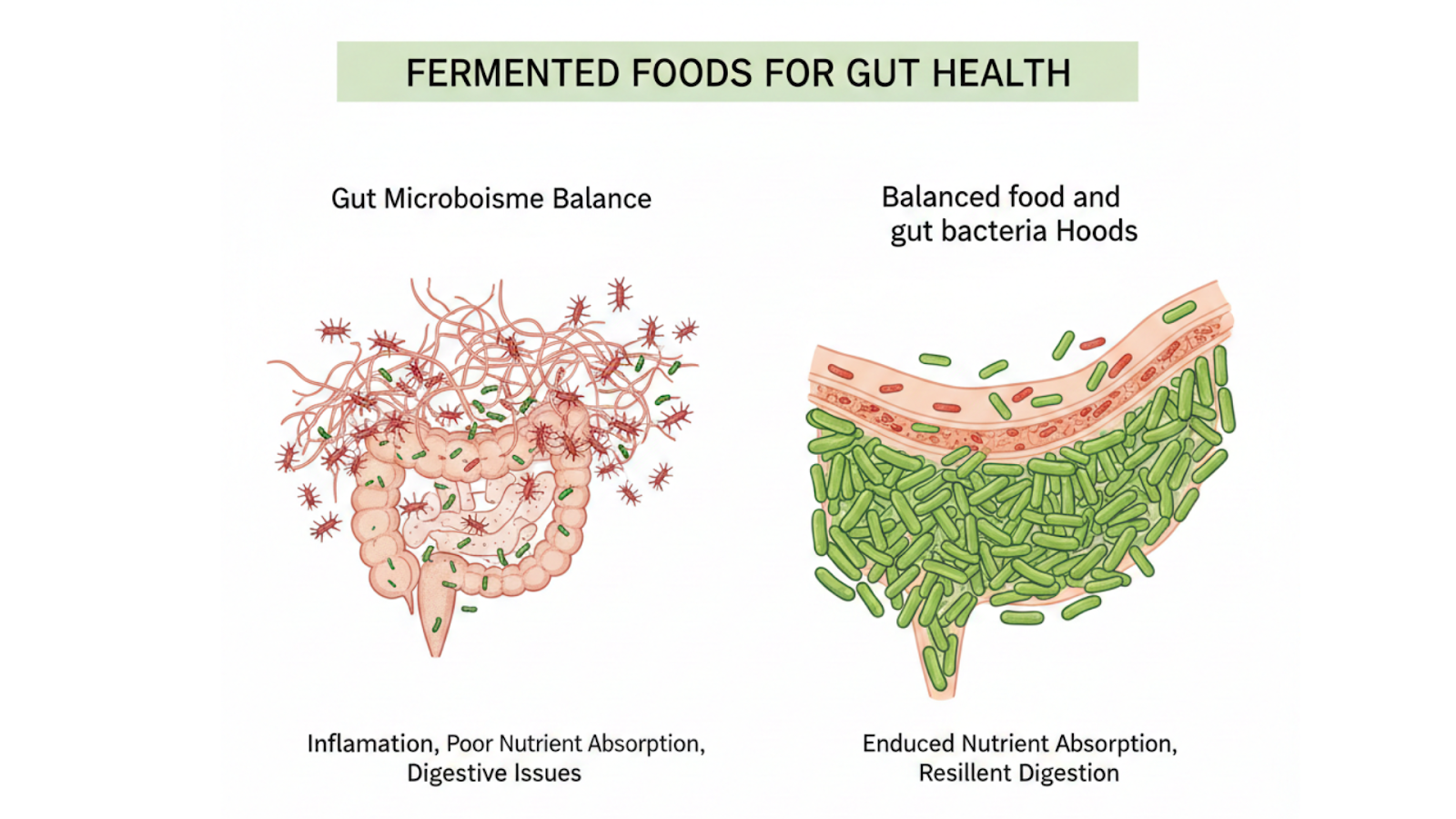
    Understanding the impact of fermented food and gut bacteria health doesn’t require a biology degree. Think of your gut as a busy construction site. To keep everything running smoothly, you need a dedicated “maintenance crew.” 

    This is exactly the role that probiotics play within your digestive tract. These living cultures patrol the gut lining, ensuring it remains strong and intact, which is essential for proper nutrient absorption.

    When you prioritize the best fermented foods to eat for gut health, you are essentially sending in reinforcements. These beneficial bacteria work to “crowd out” harmful, opportunistic strains by competing for space and resources. 

    This natural competition is vital because it helps reduce gut inflammation, the localized irritation that often leads to discomfort and long-term digestive issues.

    By maintaining this bacterial balance, you ensure that your fermented foods for gut microbiome support are actually reaching the upper fermenting gut where they are needed most. 

    A well-maintained gut lining means fewer toxins enter your system and more vitamins and minerals make it into your bloodstream, turning your “maintenance crew” into a foundation for total body resilience.

    The Best Fermented Foods for Intestinal Balance

    Not every jar in the dairy or condiment aisle offers the same level of clinical utility. To truly support your fermented foods for gut microbiome goals, you must choose items that contain active, living organisms.
    Here is a curated selection of the most effective staples for restoring equilibrium.

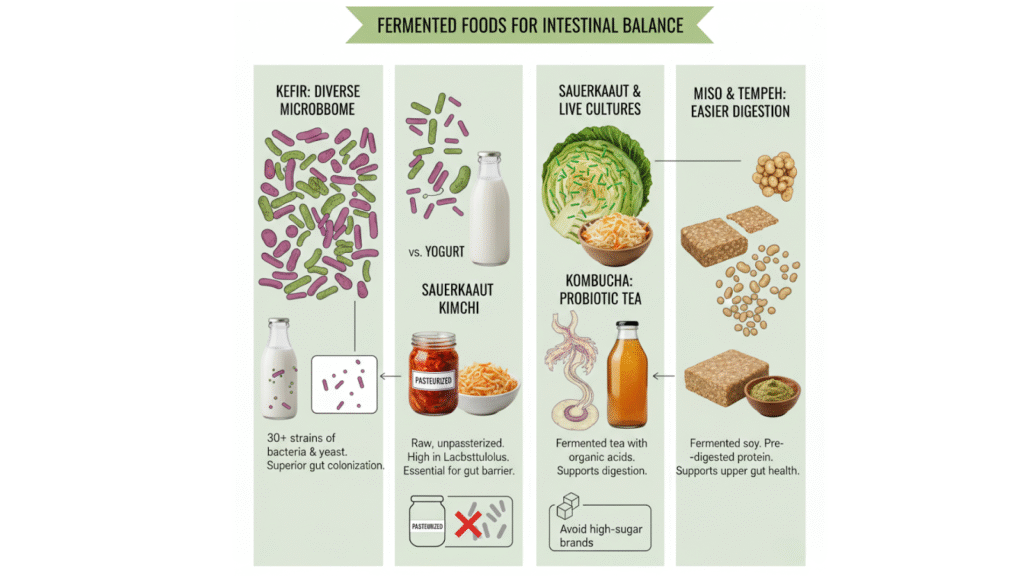
    Kefir: The Powerhouse of Diversity

    While yogurt is a great starting point, kefir is often considered the gold standard for fermented drinks for gut health. Unlike yogurt, which usually contains only a few strains of bacteria, kefir is fermented with “grains” that harbor a complex community of over 30 different strains of beneficial bacteria and yeasts. This superior diversity makes it far more effective at colonizing the gut and supporting a gut health reset meal plan.

    Sauerkraut & Kimchi: The Raw Essentials

    Cabbage-based ferments like sauerkraut and kimchi are among the best fermented foods for gut health due to their high fiber content and lactic acid bacteria. 

    However, there is a catch: you must look for “raw” or “unpasteurized” versions found in the refrigerated section. 

    Canned or shelf-stable varieties have been heat-treated, which kills the live cultures your fermented stomach needs to thrive.

    Kombucha: The Effervescent Aid

    Kombucha is a tangy, sparkling tea that has gained popularity as a primary fermented drink for gut health. Many people drink it to Improve Gut Health Naturally, as it provides organic acids that can aid digestion. However, discernment is required when shopping.

    Many commercial brands are loaded with added sugars to appeal to a mass market, which can inadvertently feed the harmful bacteria you’re trying to crowd out. Always check the label for low-sugar, traditionally brewed options to support your goal of better gut health naturally.

    Miso & Tempeh: Pre-Digested Proteins

    For those who find legumes or soy difficult to digest, miso and tempeh are change-makers. The fermentation process breaks down the anti-nutrients and complex proteins in soy, making them much easier on the upper fermenting gut.

    • Miso is a fermented paste perfect for dressings and soups (just avoid boiling it to keep the bacteria alive).
    • Tempeh is a firm, nutty block that provides a dense source of probiotics and bioavailable protein.

    Is Apple Cider Vinegar a Fermented Food?

    It is one of the most common questions in the world of natural health: Is apple cider vinegar a fermented food? The short answer is yes. 

    Apple cider vinegar (ACV) is the result of a two-step fermentation process where yeast metabolizes the sugars, in apple juice to create alcohol, which is then converted into acetic acid by specific bacteria.

    However, not all bottles offer the same value for your fermented foods for gut microbiome strategy. To gain any probiotic benefit, you must choose a version that is raw, unfiltered, and contains the “Mother.” 

    This cloudy sediment is a complex structure of beneficial bacteria and enzymes. Without it, the vinegar is simply an acidic liquid used for flavor, lacking the living cultures needed to support your internal ecosystem.

    While ACV is excellent for stimulating stomach acid and preparing the upper fermenting gut for a meal, it requires careful handling.

    Practitioner Tip: Because of its high acidity, never drink ACV straight. To protect the delicate mucosal lining of your esophagus and the enamel of your teeth, always dilute one tablespoon in at least eight ounces of water.

    As any experienced gut health natural practitioner would advise, integrating ACV into your routine can be a brilliant way to reduce gut inflammation when used as a digestive tonic before meals, helping your body break down nutrients more efficiently.

    Managing “Upper Fermenting Gut” (Auto-Brewery Syndrome)

    While we often focus on the benefits of fermented foods for gut health and skin, there is a rare but significant condition where fermentation happens in the wrong place or at the wrong intensity. 

    This is often referred to as a “fermented gut” or, more clinically, Auto-Brewery Syndrome. In this scenario, an overgrowth of yeast in the upper fermenting gut begins to turn dietary carbohydrates and sugars into ethanol (alcohol) internally.

    This imbalance can lead to symptoms that mirror intoxication, such as brain fog, dizziness, and extreme bloating, even if you haven’t touched a drink. 

    It is a clear signal that the microbial ecosystem is severely out of sync, with fungal strains dominating the beneficial bacteria that usually keep them in check.

    If you suspect your system is over-fermenting in this way, the approach shifts from simply adding probiotics to strategically rebalancing the environment.

    Practitioner Tip: If you are dealing with an overactive fermented gut, pivot toward a strictly low-carbohydrate approach. By reducing the “fuel” (sugars and starches), you starve the yeast. 

    Additionally, incorporating natural antifungal support, such as oregano oil or caprylic acid, can help clear the path for your fermented foods for gut microbiome recovery to actually take hold.

    Homemade Fermentation: Simple Organic Recipes

    While artisanal jars of probiotics can be expensive, one of the best ways to secure the best fermented foods for gut health is to make them yourself. 

    Traditional countertop fermentation is incredibly cost-effective and allows you to control the quality of your ingredients, ensuring you are using the freshest organic fermented vegetables available.

    You don’t need fancy equipment to get started, just a clean glass jar, sea salt, and a little patience. The “Salt + Water + Time” method, also known as lacto-fermentation, is the foundation of almost every vegetable ferment.

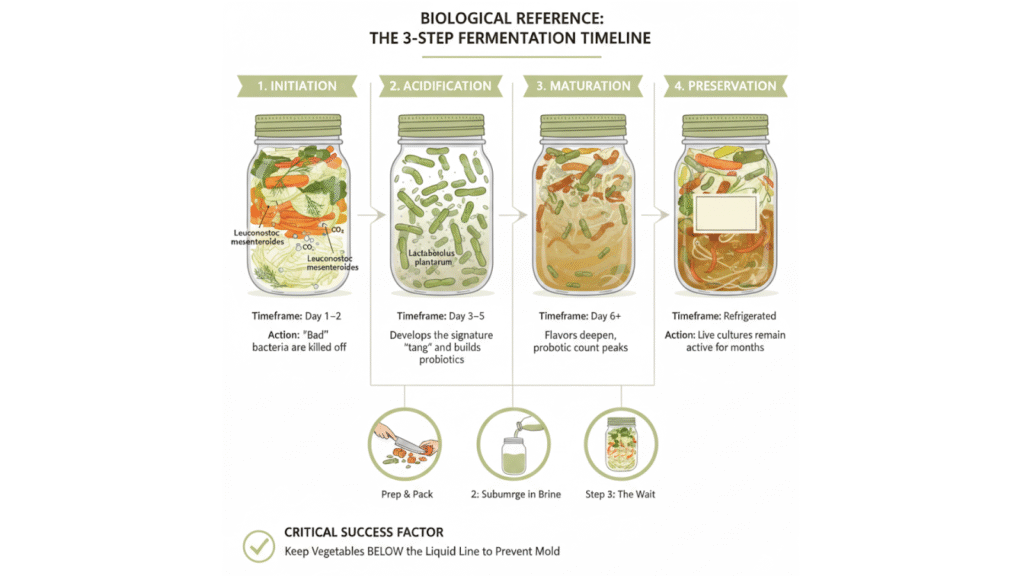
    The Basic 3-Step Brine Method

    This method works for almost any vegetable, from crunchy carrots and radishes to classic cabbage.

    1. Prep and Pack: Wash and chop your organic vegetables. Pack them tightly into a clean glass jar, leaving about an inch of space at the top. You can add garlic, dill, or peppercorns to create your own unique recipes for fermented food.
    2. Submerge in Brine: Create a simple brine by dissolving 1 to 1.5 tablespoons of sea salt in 2 cups of filtered water. Pour the brine over the vegetables until they are completely submerged. This is critical; keeping the vegetables below the liquid line prevents mold and ensures healthy fermented foods for the gut microbiome environment.
    3. The Wait: Seal the jar loosely (or use a fermentation lid) and leave it on your kitchen counter out of direct sunlight. After 3 to 7 days, start tasting. Once it reaches your desired tanginess, move it to the refrigerator to slow the fermentation process.

    By mastering this simple rhythm, you can ensure your kitchen is always stocked with the best fermented foods to eat for gut health without breaking the bank. 

    It turns your home into a laboratory for wellness, providing a constant supply of “maintenance crew” members for your digestive tract.

    Who Can Guide You on Fermented Foods for Better Intestinal Health

    Finding the right path toward digestive wellness often requires a blend of traditional wisdom and professional insight. At Natural Healing Haven, we believe that restoring your microbiome is a collaborative journey that combines the power of time-tested staples with modern lifestyle adjustments. 

    If you are looking for personalized strategies to integrate these powerful foods into your daily routine, consulting with a Holistic Nutritionist Calgary can provide the tailored guidance necessary to navigate your unique biological needs. 

    Whether you are managing specific digestive sensitivities or simply looking to optimize your nutrient absorption, professional support ensures that your transition to a culture-rich diet is both safe and sustainable.

    Conclusion

    Restoring your digestive health isn’t about chasing the latest fad; it’s about returning to a way of eating that honors your biology. By incorporating the best fermented foods for gut health into your daily rhythm, you are doing more than just alleviating temporary discomfort. 

    You are actively participating in a biological restoration, providing your “maintenance crew” with the tools they need to reduce gut inflammation, strengthen your internal defenses, and unlock the full nutritional potential of every meal you eat.

    Whether you start by sipping a tangy fermented drink for gut health like kefir or by fermenting your own organic fermented vegetables on the kitchen counter, the key is consistency. 

    Your fermented foods for gut microbiome journey is a cumulative one; each small serving is a vote for a more resilient, energetic version of yourself. By making these traditional staples a non-negotiable part of your lifestyle, you ensure that your “road to health” is not just paved, but thriving.

    FAQS

    Are fermented foods good for gut health?

    Yes, fermented foods are essential because they provide a living source of beneficial bacteria that reinforce the intestinal barrier and improve immune function. By populating the gut with these cultures, you help reduce gut inflammation and create a resilient environment that naturally crowds out harmful pathogens.

    What is the best fermented drink for gut health?

    Kefir is widely considered the best fermented drink for gut health because it contains a much higher density and diversity of probiotic strains compared to standard yogurt or kombucha. It acts as a powerful liquid supplement that supports both the upper fermenting gut and the lower intestinal tract with every sip.

    What are the best fermented foods for microbiome diversity?

    The best fermented foods to eat for gut health variety are raw sauerkraut, kimchi, and traditional miso, as they provide unique bacterial strains along with prebiotic fiber. Rotating through a list of fermented foods for gut health ensures your microbiome receives the wide spectrum of microorganisms necessary for total systemic balance.

  • How to Fix an Underactive Thyroid Naturally: A Holistic Approach

    How to Fix an Underactive Thyroid Naturally: A Holistic Approach

    When Edison spoke these words, he wasn’t just predicting the future; he was describing a fundamental truth about how our bodies actually heal. If you’ve been feeling like a shell of your former self, dragging through the day with heavy limbs, a foggy brain, and a metabolism that seems to have hit a brick wall, you know exactly how frustrating it is when your “engine” starts to fail. That engine is your thyroid, and when it slows down, everything else goes with it.

    But here is the catch: popping a pill to mask the exhaustion doesn’t always bring back the spark. You might be told your “levels are normal,” yet you still can’t lose weight or find the energy to play with your kids. 

    Why is there such a gap between your lab results and how you actually feel? It’s because managing a symptom is not the same as restoring your vitality. It’s time to stop just “managing” your condition and start understanding how to fix an underactive thyroid naturally by looking at the bigger picture.

    Recognizing Thyroid Dysfunction: Symptoms and Root Causes

    To understand how to fix thyroid dysfunction, we first have to recognize the language the body uses to communicate distress. Your thyroid doesn’t just “quit”; it sends out a series of SOS signals that often start as whispers before turning into a roar. 

    When we ignore these signals or mask them with caffeine and sugar, we miss the opportunity to apply a natural therapy for hypothyroidism before the condition progresses.

    Common Symptoms of Thyroid Imbalance

    The most frustrating part of an underactive thyroid is how “invisible” the symptoms can feel to others, despite how heavy they feel to you. If you are struggling with any of the following, your metabolic engine may be stalling:

    • Persistent Fatigue: This isn’t just “a long day” tired; it’s a deep, cellular exhaustion that remains even after a full night’s sleep.
    • Unexplained Weight Gain: Finding that your clothes are getting tighter despite no changes in your diet or exercise routine is a classic sign of a slowing metabolic rate.
    • Cold Intolerance: Do you find yourself wearing a sweater when everyone else is comfortable? When your metabolism slows, your body struggles to generate internal heat.
    • Brain Fog: Feeling “spaced out,” having trouble concentrating, or forgetting simple words are common signs that your brain isn’t getting the metabolic energy it needs.

    Thyroid Symptoms in Male Patients: What to Watch For

    Hypothyroidism is often portrayed as a “woman’s issue,” but thyroid symptoms in male patients are more common than many realize and are frequently overlooked. Men often dismiss their symptoms as “just getting older” or a drop in testosterone.

    Beyond the standard fatigue, men should pay close attention to libido changes and a sudden decrease in muscle strength. 

    If you’re hitting the gym but losing muscle tone, or if your drive has vanished without explanation, it’s time to look at underactive thyroid treatment as a potential solution. Thyroid hormones are foundational to reproductive health and protein synthesis in both genders.

    Is Hypothyroidism Curable? Setting Realistic Expectations

    One of the most frequent questions people ask is: Is hypothyroidism curable? The answer depends largely on how you define “cure.” In conventional medicine, the focus is often on lifelong medicine for hypothyroidism to replace what the body isn’t making.

    However, from a holistic perspective, we focus on “remission” or “reversing symptoms.” While you may always have a genetic predisposition toward thyroid issues, many people find that through thyroid hypothyroidism natural treatment, they can restore their energy, lose the weight, and clear the fog to the point where the condition no longer impacts their quality of life. The goal isn’t just a lab result; it’s a body that functions with vitality and ease.

    The Role of Alternative Medicine for Hypothyroidism

    While conventional treatments focus on hormone replacement, a growing number of people are looking for a more comprehensive way to regain their health. Relying on a single metric from a blood test often fails to capture the complexity of how you actually feel. 

    This is where alternative medicine for hypothyroidism steps in, bridging the gap between clinical numbers and true physical vitality.

    Understanding Thyroid Treatment: Beyond Traditional Medicine

    The standard of care for decades has been synthetic hormone replacement. Many patients find themselves asking what is in levothyroxine, only to discover it is a synthetic version of Thyroxine (T4). 

    While T4 is the primary hormone produced by the thyroid, it is actually “inactive.” Your body must convert it into T3, the active form, before your cells can use it for energy.

    Many people seek alternative medicine for hypothyroidism because, despite taking their medication, they still experience “hypothyroid” symptoms. 

    This happens when the body struggles with that crucial conversion process. By supplementing traditional care with holistic strategies, we can support the body’s natural ability to utilize the hormones it already has.

    How to Fix Thyroid Dysfunction Through Gut Health

    If you want to know how to fix thyroid dysfunction, you have to look further down the body than just the neck. A staggering amount of thyroid hormone conversion (T4 to T3) happens in the liver and the digestive tract.

    When your gut is inflamed, or your liver is sluggish, this conversion slows down, leaving you with plenty of “inactive” hormone but very little “active” energy.

    Improving gut health through probiotics, digestive enzymes, and an anti-inflammatory diet isn’t just about digestion; it’s a direct remedy for underactive thyroid symptoms. By healing the gut, you are essentially clearing the path for your hormones to do their job.

    Nutritional Foundations: Remedies for Underactive Thyroid

    If your thyroid is the engine of your body, then nutrition is the fuel. You cannot expect a high-performance output if you are feeding the system “low-grade” materials. When exploring how to cure an underactive thyroid gland naturally, we must look at the specific micronutrients that the thyroid gland craves to do its job.

    Essential Food Supplement for Thyroid Health

    While a balanced diet is the goal, certain nutrients are so critical that they often require targeted supplementation or conscious dietary focus.

    • Iodine: The most famous medicine for hypothyroidism isn’t a drug, but a mineral. Iodine is the literal backbone of thyroid hormones. However, more isn’t always better; balance is essential to avoid “over-revving” the gland.
    • Selenium: Think of selenium as the “bodyguard” for your thyroid. It protects the gland from oxidative stress and is the primary driver behind the conversion of T4 into the active T3 hormone.
    • Zinc: Often overlooked, zinc is necessary for your cells to “hear” the thyroid hormone’s signal. Without enough zinc, your hormones might be circulating, but your cells remain “deaf” to their instructions.
    • Vitamin D: Frequently found to be low in those with thyroid issues, Vitamin D acts more like a hormone than a vitamin, helping to modulate the immune system and reduce the inflammation that often causes thyroid dysfunction.

    The Thyroid Diet: Foods to Include and Avoid

    Understanding thyroid hypothyroidism natural treatment means knowing that not all “healthy” foods are created equal. Some popular health foods can actually act as “goitrogens,” substances that interfere with iodine uptake.

    Avoid or Limit (Goitrogenic)Embrace (Thyroid-Supporting)
    Raw Cruciferous Veggies: Kale, broccoli, and cabbage (Cooking them neutralizes most goitrogens).Brazil Nuts: Just two nuts a day can provide your entire daily requirement of Selenium.
    Soy Products: Unfermented soy can block thyroid hormone activity, especially in those already deficient in iodine.Wild-Caught Fish: Rich in Omega-3s and naturally occurring iodine to support a healthy metabolic rate.
    Processed Sugars: These spike inflammation and “mute” thyroid receptors.Sea Vegetables: Kelp and nori are excellent natural sources of concentrated iodine.

    How to Treat Hypothyroidism Naturally with Herbal Support

    Beyond basic vitamins, the world of herbal medicine offers powerful hypothyroidism remedies that have been used for centuries. Two standout herbs are often at the center of a successful holistic plan:

    1. Ashwagandha: As a premier adaptogen, Ashwagandha helps lower cortisol (the stress hormone). High cortisol is a known “thyroid killer,” so by calming the nervous system, you’re giving your thyroid the space it needs to recover.
    2. Guggul: This traditional Ayurvedic resin has been shown to stimulate the thyroid gland directly and improve the conversion of T4 to T3, making it a staple in alternative medicine for hypothyroidism.

    Therapeutic Approaches to Thyroid Health

    Fixing the thyroid requires more than just dietary changes; it requires a shift in how you live and interact with your environment. Because your thyroid is highly sensitive to external signals, it acts as a sentinel for the body. If your environment feels unsafe, whether due to high stress or toxic overload, your thyroid will naturally slow down to conserve energy and protect you.

    Stress Management as a Therapy for Thyroid Problems

    One of the most significant, yet often ignored, remedies for an underactive thyroid is the management of the adrenal-thyroid axis. 

    There is a direct “Cortisol-Thyroid” connection that can halt even the best treatment plans. When you are under chronic stress, your adrenal glands pump out cortisol.

    High levels of cortisol do two things that damage thyroid health:

    1. They inhibit the production of Thyroid Stimulating Hormone (TSH).
    2. They block the conversion of inactive T4 into active T3.

    Essentially, high stress tells your body it is in “survival mode,” not “growth mode.” Incorporating a therapy for thyroid problems like meditation, deep breathing exercises, or even just prioritizing eight hours of sleep can lower cortisol and “unblock” your hormone production.

    Hypothyroidism and Natural Treatment: The Importance of Detox

    When considering how to treat hypothyroidism naturally, we must look at the “hidden” disruptors in our daily lives. Your thyroid requires iodine to create hormones, but iodine belongs to a family of elements called halogens. 

    Other halogens, such as fluoride (found in many water supplies and toothpastes) and chlorine (found in pools and tap water), have a similar atomic structure.

    Because they are “look-alikes,” these toxins can sit in the iodine receptors of your thyroid, effectively locking out the iodine your gland needs to function. This is why a natural treatment plan often includes:

    • Water Filtration: Using a high-quality filter to remove fluoride and chlorine from your drinking and shower water.
    • Toxin Reduction: Switching to fluoride-free dental care and organic household cleaners.
    • Sweat Therapy: Using infrared saunas or gentle exercise to help the body eliminate accumulated heavy metals that can interfere with thyroid signaling.

    By clearing these environmental hurdles, you allow your natural therapy for hypothyroidism to work much more effectively, giving your thyroid the clean environment it needs to thrive.

    For detail support, working with a practitioner who provides detoxification therapy can help remove accumulated toxins and support thyroid function more effectively.

    Integrated Wellness and Long-term Management

    True health isn’t a destination you reach and then forget about; it’s a state of balance you maintain. When you commit to a natural therapy for hypothyroidism, you are essentially learning how to tune your own instrument. 

    By integrating wellness into your daily rhythm, you move away from the “broken” mindset and toward a lifestyle where your thyroid and your energy can finally stabilize.

    How to Cure an Underactive Thyroid Naturally through Lifestyle Changes

    While the word “cure” is a heavy one, “reversal of dysfunction” is entirely within your reach. The most successful hypothyroidism remedies are those that become second nature.

    Start by auditing your movement. For a sluggish thyroid, less is often more. Intense, high-impact cardio can spike cortisol and further deplete an underactive thyroid. 

    Instead, adopt “functional movement” like walking in nature, swimming, or strength training. These activities build metabolic tissue without sending your body into a stress response.

    Thyroid-Friendly Lifestyle HabitsImpact on Your Health
    Low-Impact MovementPrevents cortisol spikes that shut down hormone production.
    7-9 Hours of SleepAllows the body to perform “deep repair” and hormone synthesis.
    Consistent Meal TimesStabilizes blood sugar, reducing stress on the endocrine system.
    Nature ExposureLowers sympathetic nervous system activity (Fight or Flight).

    Monitoring Your Progress: Blood Tests and Symptom Tracking

    How do you know if your thyroid hypothyroidism natural treatment is actually working? You have to look at the data both from the lab and from your own body.

    • The Lab Perspective: Don’t just settle for a TSH test. Ask for a “Full Thyroid Panel” that includes Free T4, Free T3, and Thyroid Antibodies. This gives you a map of how well your body is converting and using its hormones.
    • The Symptom Perspective: Keep a simple journal. Track your morning body temperature, your mood, and your digestion. Often, you will see your “brain fog” lift, and your temperature rise long before the lab results catch up.
    Metric to TrackWhat a “Win” Looks Like
    Morning Basal TempA steady rise toward $37°C$ (98.6°F).
    Energy LevelsFewer “afternoon slumps”; no need for 3 PM caffeine.
    DigestionRegularity and a reduction in bloating or constipation.
    Mental ClarityFaster recall and the lifting of “brain fog.”

    When to Seek Professional Thyroid Treatment

    There is no shame in needing support, and while lifestyle changes are the foundation, some cases of thyroid dysfunction require more intensive, specialized intervention.

    If you find that despite your best efforts with diet and a targeted food supplement for thyroid health, your symptoms are worsening, or if you notice physical changes like a swelling in the neck or persistent heart palpitations, it is time to consult an expert. 

    For those seeking Natural Treatments for Thyroid in Calgary, professional clinics provide the advanced diagnostic testing and holistic care necessary to uncover the root cause of your fatigue. Working with a qualified Natural Health Practitioner ensures that your protocol is safe, evidence-based, and tailored to your specific hormonal profile.

     If you are experiencing persistent common symptoms of thyroid issues, it is essential to understand your options, whether you need a bridge of medicine for hypothyroidism or a deeper dive into alternative therapies.

    Conclusion

    Reclaiming your energy from the grip of an underactive thyroid is not a sprint; it is a conscious return to balance. By moving beyond simply masking your symptoms with medicine for hypothyroidism and instead addressing the foundations of gut health, nutrient density, and stress management, you are giving your metabolic engine the tools it needs to restart. 

    Remember that every small choice, from choosing mineral-rich remedies for an underactive thyroid to prioritizing restorative sleep, is a signal to your body that it is safe to function at its peak again.

    Fixing your metabolism is about more than just a lab result; it is about waking up with clarity, moving with ease, and feeling like the person you were meant to be. While the path to how to cure underactive thyroid gland naturally requires patience and consistency, the reward is a life lived with full vitality rather than persistent exhaustion. Listening to your body’s signals, nourishing your system with intention, and seeking guidance through expert natural health consulting can help fine-tune your approach safely and effectively.

    Frequently Asked Questions

    What is the best hypothyroidism and natural treatment plan?

    The best natural treatment plan for hypothyroidism focuses on a balanced thyroid-supportive diet, stress management, adequate sleep, and targeted nutrients like iodine (if deficient), selenium, and zinc.

     Natural approaches work best when combined with regular medical monitoring rather than used as a replacement for prescribed treatment.

    Can I stop my medicine for hypothyroidism if I use natural remedies?

    No. You should not stop thyroid medication without consulting your doctor. Natural remedies can support thyroid health, but stopping medication suddenly may worsen symptoms and disrupt hormone levels.

    How long does it take to see results with natural therapy for hypothyroidism?

    Most people notice gradual improvements in energy, digestion, and mood within 4–8 weeks. Hormone balance takes time, so consistent lifestyle changes and follow-up testing are important.

    Are there specific thyroid symptoms in male patients that differ from those of females?

    Yes. In men, hypothyroidism may cause low libido, erectile dysfunction, muscle weakness, weight gain, and fatigue. These symptoms are sometimes overlooked, leading to delayed diagnosis.

    What food supplement for the thyroid is most critical?

    Selenium is one of the most important supplements for thyroid health, as it supports hormone conversion and reduces inflammation. However, supplements should only be taken after confirming deficiencies with a healthcare professional.

  • How to Get Rid of Toxins in the Body Naturally

    How to Get Rid of Toxins in the Body Naturally

    This timeless wisdom reminds us that our bodies are sophisticated, self-healing machines designed for balance. However, modern life constantly tests this equilibrium. From urban pollution and processed foods to hidden household chemicals, environmental toxins surround us, often leading to persistent fatigue and brain fog. When toxins in the body accumulate, they signal that our natural filtration systems are overwhelmed and in need of intentional support.

    Fortunately, effective body cleansing detoxification doesn’t require expensive kits; it relies on your liver, kidneys, and skin. To learn how to get rid of toxins in the body naturally, you must focus on optimizing these innate pathways. 

    By reducing your external load and nourishing your internal defenses, you empower your system to cleanse toxins efficiently, restoring your vitality and long-term health.

    Understanding the Enemy: What Are Toxins in the Body?

    To effectively clear the clutter from your system, you first have to understand what you are up against. In the context of wellness, toxins in the body refer to any substance that interferes with normal biological functions or damages cellular structures. 

    These aren’t always dramatic poisons; often, they are subtle accumulations that, over time, place a heavy burden on your immune and metabolic health.

    Metabolic vs. Environmental Toxins

    Not all toxins come from the outside world. Our bodies are actually internal “waste producers” by design. To navigate how to remove toxins from your body, it helps to categorize them:

    Metabolic Toxins: These are the natural byproducts of being alive. Every time you breathe, digest food, or move your muscles, your body creates waste like carbon dioxide, urea, and lactic acid. 

    Usually, our systems handle these effortlessly, but when we are sluggish or dehydrated, this internal debris can build up.

    Environmental Toxins: These are the modern intruders. We encounter them daily through environmental toxins like pesticides on non-organic produce, heavy metals in our water, and synthetic chemicals in plastic packaging or “fragrance” in beauty products. 

    Because many of these are foreign to our evolution, the body often struggles to process them, tucking them away in fat cells to protect our vital organs.

    Signs You Need a Body Cleansing Detoxification

    Your body is incredibly vocal; it will tell you when its filtration systems are reaching capacity. If you feel like you are constantly running on low battery, it might not just be a lack of sleep; it could be a sign that you need a body cleanse for toxins.

    The following table outlines the most common indicators that your natural detox pathways are overwhelmed and in need of intentional support:

    SymptomWhat Your Body is Telling You
    Chronic FatigueYou feel exhausted even after a full night’s rest because your energy is being diverted to manage metabolic waste.
    Persistent Brain FogDifficulty concentrating or a lack of mental clarity often stems from systemic inflammation caused by toxins in the body.
    Digestive IssuesFrequent bloating, constipation, or general discomfort suggest your gut and liver are struggling to process and move waste.
    Skin BreakoutsAcne, rashes, or dullness are often symptoms of toxins leaving the body through the skin when the liver is too overwhelmed to handle the load.
    Unexplained SensitivityBecoming suddenly sensitive to certain smells, chemicals, or specific foods can indicate a heightened toxic burden.

    Recognizing these signs is the first step toward getting rid of toxins in the body and restoring your natural state of high energy and clear skin.

    A sluggish system often shows up first as bloating or irregular digestion. Prioritizing gut health ensures that toxins are actually leaving your body instead of being recycled into your bloodstream. When your digestion is clear, other systems—like your thyroid—can finally function without the weight of systemic inflammation.

    The Big Three: Organs That Remove Toxins from the Body Naturally

    While many products claim to “detox” your system, the truth is that your body is already equipped with a high-performance filtration team. 

    To master how to remove toxins from the body naturally, you don’t need a miracle cure; you need to support the three primary organs that work 24/7 to keep your internal environment clean.

    The Liver: Your Primary Filtration System

    The liver is the ultimate gatekeeper of your health. It processes everything you eat, breathe, and absorb through your skin. To efficiently clean the liver of toxins, the organ operates in two distinct stages:

    • Phase 1 (Neutralization): The liver uses enzymes to break down toxins into smaller, often more reactive, intermediate substances.
    • Phase 2 (Excretion): The liver attaches a specific molecule to these intermediates, making them water-soluble so they can be safely eliminated via bile or urine.

    Understanding the connection between your internal organs and external appearance is key. For instance, gut health and skin
    are closely linked; when the liver is taxed, the skin often breaks out in response. If your goal is a total system refresh, following a gut health reset meal plan can jumpstart your journey toward feeling lighter.

    Actionable Tip: You can support this process by filling your plate with bitter greens like dandelion and arugula, along with cruciferous vegetables like broccoli and Brussels sprouts. These foods contain phytonutrients that act as “fuel” for Phase 2 enzymes.

    The Kidneys and Hydration

    If the liver is the processor, the kidneys are the ultimate balancing act. These bean-shaped organs filter about 150 quarts of blood daily to remove water-soluble waste products. 

    Without adequate hydration, these wastes become concentrated, making it significantly harder for the kidneys to maintain the body’s delicate chemistry. Drinking filtered water throughout the day is the simplest, most effective way to ensure body cleansing and detoxification stay on track.

    The Skin: Does Sweating Release Toxins?

    The skin is often called the “third kidney” because of its role in elimination. A frequent question in wellness circles is: Does sweating release toxins? While sweat is primarily composed of water and salt, scientific research has confirmed that it plays a legitimate role in detoxification.

     Studies have shown that trace amounts of heavy metals, including arsenic, cadmium, and lead, can be excreted through the skin during intense exercise or sauna sessions. By inducing a deep sweat, you are essentially providing an alternative exit route for substances that might otherwise burden your internal organs.

    Actionable Steps: Getting Rid of Toxins in the Body

    Knowledge is only as powerful as the action behind it. Once you understand how your organs function, the next step is to implement daily habits that actively facilitate getting rid of toxins in the body. 

    By making small, intentional shifts in your diet and environment, you can significantly lower your toxic burden and reclaim your natural energy.

    Dietary Changes: How to Remove Toxins from Your Body with Food

    What you put on your fork is your most powerful tool for body cleansing and detoxification. To protect your cells from the damage caused by free radicals, focus on a diet rich in antioxidants.

    Antioxidant Powerhouses: Berries (blueberries, raspberries), pecans, and dark leafy greens are packed with compounds that combat oxidative stress. These antioxidants act as a shield, neutralizing toxins in the body before they can damage your DNA.

    The Critical Role of Fiber: Fiber is the unsung hero of detoxification. Think of it as a physical “broom” in your digestive tract. Fiber binds to bile and processed toxins in the gut, ensuring they are carried out of the body rather than being reabsorbed into the bloodstream. Increasing your intake of beans, lentils, and chia seeds is essential for a complete body cleanse of toxins.

    The Power of Sleep (The Glymphatic System)

    We often think of detox as something that happens in the gut, but your brain has its own specialized waste-management system called the glymphatic system. During deep sleep, the space between brain cells increases, allowing cerebrospinal fluid to wash away metabolic waste, specifically a protein called beta-amyloid.

    If you are consistently sleep-deprived, this “brain wash” cannot occur, leading to the mental fog often associated with a high toxic load. 

    Prioritizing seven to nine hours of quality sleep is perhaps the most underrated way to remove toxins from your body and maintain cognitive sharpness.

    Reducing Exposure to Environmental Toxins

    While we cannot control the outdoor air, we have immense control over our immediate surroundings. How to remove toxins from the body naturally starts with reducing the “input,” so your liver doesn’t have to work as hard.

    Glass Over Plastic: Bisphenol A (BPA) and phthalates from plastic containers can leach into your food, especially when heated. Swapping to glass or stainless steel containers is a simple way to avoid these endocrine disruptors.

    Clean Your Air: Since we spend the majority of our time indoors, using a HEPA air purifier can drastically reduce the inhalation of environmental toxins like mold spores, dust, and volatile organic compounds (VOCs).

    Natural Cleaning Products: Traditional household cleaners often contain harsh synthetic chemicals. Switching to plant-based alternatives or simple solutions like vinegar and baking soda reduces the chemical film left on your home’s surfaces and in the air you breathe.

    Holistic Therapies: Baths and Bodywork

    While diet and sleep form the foundation of health, topical and mechanical therapies can provide the extra push your body needs to move stagnant waste. Integrating these ancient and modern practices helps ensure that your body cleansing and detoxification reach the cellular level.

    The Best Detox Bath to Remove Toxins

    Creating a sanctuary in your own bathroom is one of the most effective and relaxing ways to support your system. A specialized soak can help draw out impurities while replenishing vital minerals that are often depleted by stress.

    Use the following guide to prepare your restorative soak:

    IngredientAmountBenefit
    Epsom Salts2 CupsRich in Magnesium Sulfate, which supports over 300 enzymatic reactions and powers cellular detoxification.
    Baking Soda1 CupHelps neutralize skin acidity and assists in the gentle removal of environmental toxins from the skin’s surface.
    Lavender Oil5–10 DropsPromotes a “rest and digest” state, the essential physiological condition for the body to effectively detoxify.

    As you soak, the magnesium is absorbed through the skin, helping to relax muscles and support the liver’s metabolic pathways. 

    This is widely considered the best detox bath to remove toxins because it addresses both physical waste and the mental stress that often hinders natural cleansing.

    Hijama (Cupping) and Lymphatic Drainage

    Sometimes, the body needs a mechanical assist to get fluids moving. Unlike the circulatory system, which has the heart to pump blood, the lymphatic system, the “sewer system” of your body, relies on movement and pressure to circulate. 

    Without regular stimulation, this system can become stagnant, leading to a buildup of waste and a feeling of lethargy.

    By combining these physical therapies with internal support, you create a comprehensive approach to getting rid of toxins in the body that leaves you feeling lighter, clearer, and more resilient.

    If you want a hands-on approach to clearing stagnant waste, professional detoxification therapy provides the structural support your organs need. Specialized techniques like cupping therapy physically draw out deep-seated impurities that diet alone might not reach. These services bridge the gap between home care and clinical results.

    TherapyHow it WorksPrimary Benefit
    Hijama (Cupping)Uses localized suction to draw blood flow to specific tissues.De-stagnates tissues and brings toxins in the body to the surface for easier lymphatic processing.
    Lymphatic DrainageA gentle, rhythmic technique that manually stimulates the flow of lymph fluid.Accelerates the removal of cellular waste while reducing puffiness and bloating from a sluggish system.

    What to Expect: Symptoms of Toxins Leaving the Body

    Embarking on a journey to remove toxins from your body is an empowering decision, but the process of restoration isn’t always linear. 

    As your system begins to mobilize stored waste and clear out metabolic debris, you may experience a temporary period of adjustment. Understanding these signals is vital so you don’t mistake progress for a setback.

    The Healing Crisis (Herxheimer Reaction)

    In the wellness world, this transition is often referred to as a “healing crisis” or a Herxheimer reaction. This occurs when toxins in the body are released into the bloodstream faster than the liver and kidneys can filter them out. 

    While it may feel counterintuitive, these uncomfortable sensations are often a sign that your body’s cleansing and detoxification is working effectively.

    Common symptoms of toxins leaving the body include:

    • Mild Headaches: Often caused by the release of metabolic waste or the withdrawal from caffeine and processed sugars.
    • Temporary Fatigue: Your body is rerouting significant amounts of energy toward cellular repair and filtration.
    • Skin Breakouts: As the skin assists in purging impurities, you may notice temporary blemishes or rashes.
    • Mild Nausea or Digestive Shifts: A sign that the gallbladder and liver are dumping bile and waste products for elimination.

    Advice for the Transition

    If you find yourself in the midst of a healing crisis, the best approach is to lean into the process rather than fight it. Rest and hydration are crucial during this phase. 

    Drinking extra filtered water helps dilute the toxins in your bloodstream, making them easier for the kidneys to flush out. Permit yourself to sleep longer, as this provides the glymphatic system the time it needs to finish the job. 

    Usually, these symptoms subside within 24 to 48 hours, leaving you with a level of clarity and energy that makes the temporary discomfort well worth the wait.

    Natural vs. Commercial: A Comparison

    Marketing often pushes “total body resets” that promise miracles in days. However, there is a massive difference between forcing your body into stress and supporting its natural biology. 

    To truly understand how to remove toxins from the body naturally, we must look past the packaging.

    Why Natural Methods Beat “Quick Fix” Teas

    Most commercial detox teas rely on harsh laxatives like senna. These don’t clean the liver of toxins; they simply irritate the digestive tract. 

    True body cleansing detoxification should be a gentle, nourishing process that enables your organs, rather than a punishing regimen that leaves you feeling depleted.

    FeatureNatural DetoxificationCommercial “Quick Fix”
    ApproachSupports Liver, Kidneys, and Skin.Laxative or stimulant-based.
    SustainabilitySustainable, long-term lifestyle.Short-term and restrictive.
    Physical ImpactBuilds energy and clears skin.Depletes electrolytes and water.
    ResultsGenuine waste elimination.Temporary water weight loss.

    Note: Remember, getting rid of toxins in the body should be gentle, not punishing. Authentic health is built on consistency and supporting your body’s innate wisdom.

    Who to Consult to Get Rid of Toxins in the Body Naturally

    If you are feeling overwhelmed by the toxic load of modern life, seeking professional guidance is the most effective way to restore your vitality. For those in Canada, Calgary, the team at Natural Healing Haven offers expert support through tailored protocols that respect your body’s unique rhythm.

    By consulting with professionals who specialize in natural detoxification therapy, you can move beyond guesswork and implement a strategy that focuses on long-term wellness rather than temporary fixes. Their holistic approach ensures your path to health is safe, science-backed, and perfectly aligned with your personal health goals.

    Conclusion

    Adopting a lifestyle that prioritizes getting rid of toxins in the body is not about a temporary restriction, but about a long-term commitment to your biological health. By supporting your liver, kidneys, and skin through whole foods, proper hydration, and restorative sleep, you shift from a state of toxic accumulation to one of vibrant renewal. 

    This gentle, holistic approach ensures that your internal systems can function at their highest capacity, allowing you to reclaim the mental clarity and physical energy that are often masked by the stressors of modern living.

    True body cleansing detoxification is a testament to the body’s incredible resilience when given the right tools. Rather than chasing “quick-fix” trends that lead to depletion, focus on the consistent habits that nourish your innate filtration pathways. 

    As you reduce your exposure to environmental toxins and listen to your body’s signals, you will find that vitality is not something you have to force; it is the natural result of a clean, well-supported system.

    FAQs

    How long does it take to remove toxins from the body naturally?

    The timeline varies depending on your current toxic load and lifestyle habits. While the body filters waste 24/7, most people begin to notice significant improvements in energy and skin clarity within 7 to 14 days of implementing consistent dietary and hydration changes.

    Can lemon water help clean the liver of toxins?

    Lemon water doesn’t “wash” the liver, but it provides high levels of vitamin C and antioxidants that protect liver cells from oxidative damage. The acidity also stimulates bile production, which is a key vehicle the liver uses for getting rid of toxins in the body.

    Is fasting safe for body cleansing and detoxification?

    Intermittent fasting can be a safe way to trigger autophagy, a process where cells clean out damaged components. However, extended fasts should be approached with caution; for most, a balanced diet rich in fiber and nutrients is more effective for sustainable body cleansing and detoxification.

    Do foot pads really work for removing toxins?

    There is no scientific evidence that adhesive foot pads can pull toxins in the body through the soles of the feet. True detoxification is an internal metabolic process; you are much better off focusing on supporting your liver and kidneys through hydration and whole foods.

  • How to Detox Liver Naturally at Home: Juices, Diet, and Supplements

    How to Detox Liver Naturally at Home: Juices, Diet, and Supplements

    “The human body is the only machine for which there are no spare parts.” — Hermann Biggs.

    This perspective reminds us that while we can upgrade our technology or repair our homes, our internal biology requires consistent, proactive care to last a lifetime. Nowhere is this more evident than with the liver, an organ that manages over 500 vital functions every single day. When the system becomes overwhelmed, we don’t need a replacement; we need a restoration.

    Reclaiming Your Vitality Through Natural Detoxification

    Learning how to detox liver naturally at home is less about aggressive “cleanses” and more about providing your body with the raw materials it needs to thrive. As the body’s primary filtration system, your liver is responsible for everything from metabolizing nutrients to clearing out metabolic waste. 

    By incorporating the best detoxification foods and hydration into your daily routine, you support this internal powerhouse in its mission to keep you energized and healthy.

    This guide offers a roadmap for refreshing your health from the inside out, utilizing simple, science-backed home remedies.

    Understanding Liver Health and Toxicity

    Before diving into specific remedies, it is essential to understand that the liver doesn’t just store toxins; it transforms them. It acts as the body’s ultimate gatekeeper, deciding what stays as fuel and what gets flushed away. 

    However, even the most efficient systems have a breaking point. When the toxic load from processed diets, alcohol, and environmental pollutants exceeds the liver’s processing capacity, your health begins to signal for help.

    Signs Your Liver Needs a Detox

    The liver is often called the “silent organ” because it rarely hurts, even when it’s struggling. Instead, it communicates through systemic symptoms that affect your daily quality of life. Common indicators that you should look into how to detox liver naturally at home include:

    • Chronic Fatigue: A sluggish liver struggles to manage glucose, leaving you feeling drained even after a full night’s sleep.
    • Skin Issues: When the liver can’t filter toxins effectively, the body may try to expel them through the skin, leading to acne, rashes, or itchiness.
    • Digestive Distress: Since the liver produces bile to break down fats, a backup in the system often results in bloating, acid reflux, or a sudden intolerance to fatty foods.

    A sluggish liver often causes a ripple effect that damages your gut health, leading to long-term bloating. When the liver produces less bile, your entire digestive tract struggles to process meals.

    The Anatomy of Detoxification: Phase 1 and Phase 2 Pathways

    To support your liver, you must understand its two-step filtration process. In Phase 1, the liver uses enzymes to turn fat-soluble toxins into intermediate substances. Ironically, these intermediates can sometimes be more reactive than the original toxin.

    This is where Phase 2 becomes critical. In this stage, the liver adds a protective molecule to those reactive substances, making them water-soluble so they can be safely excreted through urine or bile. 

    Effective remedies for liver detox focus on providing the specific antioxidants and amino acids needed to ensure Phase 2 keeps pace with Phase 1, preventing a “bottleneck” of toxins in your bloodstream.

    Healthy Liver vs. Fatty Liver: At a Sight

    Understanding the physical and functional differences between a healthy liver and one struggling with fat accumulation is the first step toward effective recovery. Below is a breakdown of how these states compare:

    FeatureHealthy LiverFatty Liver (Steatosis)
    Physical AppearanceSmooth, firm, and reddish-brown.Enlarged, yellowish, and greasy to the touch.
    Cellular FunctionEfficiently filters blood and metabolizes nutrients.Fat droplets build up inside cells, hindering function.
    Bile ProductionConsistent; supports optimal digestion of fats.Often sluggish; leads to bloating and indigestion.
    Inflammation LevelsLow; high regenerative capacity.Increased can lead to scarring (fibrosis/cirrhosis).
    Metabolic ImpactRegulates blood sugar and cholesterol effectively.Linked to insulin resistance and high triglycerides.
    Primary SolutionA balanced diet and regular physical activity.How to detox the liver naturally at home via diet & lifestyle.

    Nutritional Strategies: Juices and Best Detoxification Foods

    The foundation of any successful liver reset lies in the kitchen. By flooding your system with specific phytonutrients, you provide the chemical “tools” your liver needs to bind to toxins and usher them out of your body. Integrating a mix of potent liquids and fiber-rich solids creates a comprehensive approach to internal cleansing.

    Choosing the right foods can be confusing, but a holistic nutritionist can build a custom plan for your unique body. This ensures you are eating the exact nutrients your liver specifically lacks.

    Homemade Liver Detox Drink Recipes

    Starting your day with a targeted homemade liver detox drink can stimulate bile flow and kickstart Phase 1 detoxification enzymes. Here are three simple, effective blends you can make at home:

    • The Morning Flush: Mix 8oz of warm water with the juice of half a fresh lemon and a pinch of cayenne pepper. This remedy may stimulate bile flow, improve hydration, and support digestion, rather than “flush overnight waste, This lemon water trick is helpful because it addresses symptoms of low stomach acid by priming your digestion. Better acid levels mean your liver doesn’t have to work as hard to filter undigested food.
    • The Ruby Refresher: Combine 4oz of unsweetened fruit juice for liver detox, specifically tart cherry or pomegranate, with a splash of sparkling water. These fruits are rich in anthocyanins, which protect liver cells from oxidative stress, these juices work on the liver, you might also need natural remedies for bloating to ease stomach pressure today. Combining liver support with gut-soothing herbs helps you feel lighter immediately.
    • The Citrus Zest: Blend fresh grapefruit juice (ensure no medication contraindications) with a teaspoon of extra virgin olive oil. The naringenin in grapefruit has been shown to help prevent fat accumulation in the liver.

    Note: Grapefruit juice can interact with certain medications (such as statins or blood pressure drugs). Always consult your healthcare provider before adding grapefruit to your detox routine.

    The Power of Liver Cleansing Juice: Beets, Carrots, and Ginger

    When it comes to a dedicated liver cleansing juice, the combination of beets, carrots, and ginger is the gold standard.

    Beets contain betalains, compounds that reduce inflammation and support the Phase 2 detoxification pathway. Carrots are packed with beta-carotene and flavonoids, which improve overall liver function. 

    Adding fresh ginger provides a thermogenic effect, aiding digestion and reducing the metabolic stress on the liver. A daily 8oz glass of this liver detoxification juice acts as a concentrated shot of antioxidants that helps “wash” the hepatic filters.

    Best Detoxification Foods to Add to Your Diet

    While juices provide quick absorption, your main meals should be built around the best detoxification foods to provide sustained support. Focus on these three powerhouses:

    • Cruciferous Vegetables: Broccoli, Brussels sprouts, and cauliflower contain sulforaphane, which significantly increases the liver’s natural detoxification enzymes.
    • Garlic: Rich in sulfur and selenium, garlic activates the enzymes responsible for flushing out toxins and protects the liver from heavy metal damage.
    • Turmeric: The active compound, curcumin, is a potent anti-inflammatory that helps repair damaged liver cells and improves the production of bile.

    Juicing vs. Whole Foods: Which is Better for the Liver?

    A common question is whether you should drink your nutrients or eat them. The reality is that both serve distinct purposes in a liver-friendly lifestyle.

    FeatureJuicing (Liquid)Whole Foods (Solid)
    Nutrient AbsorptionQuick: Vitamins and minerals hit the bloodstream almost instantly.Steady: Nutrients are released slowly during the digestion process.
    Fiber ContentLow: Most insoluble fiber is removed during the juicing process.High: Essential for “sweeping” toxins out of the intestinal tract.
    Digestive EaseHigh: Gives the digestive system a “rest” while providing nutrients.Moderate: Requires energy to break down, which helps regulate blood sugar.
    Primary GoalTargeted liver detoxification juice for an acute nutritional boost.Long-term maintenance and blood sugar stabilization.

    Supplements and Remedies for Liver Detox

    While a nutrient-dense diet forms the foundation, specific liver detoxification supplements can provide the concentrated support needed to repair damaged cells and optimize filtration. However, not all supplements are created equal. The most effective approach involves using clinically backed compounds that target the liver’s internal chemistry.

    Best Liver Supplements for Maintenance and Repair

    Two powerhouses dominate the conversation when it comes to professional-grade liver support: Milk Thistle and N-Acetyl Cysteine (NAC).

    • Milk Thistle (Silymarin): This herb has been used for centuries as a premier remedy for liver detox. Its active component, silymarin, acts as a biological shield. 

    It stabilizes liver cell membranes to prevent toxins from entering and stimulates protein synthesis, which helps the liver regenerate itself after damage.

    • N-Acetyl Cysteine (NAC): NAC is a precursor to glutathione, the body’s “master antioxidant.” By replenishing glutathione levels, NAC fuels the liver’s ability to neutralize reactive oxygen species and heavy metals. It is so effective that it is used in clinical settings to treat acute liver toxicity.

    While research supports these supplements, their use should be guided by a healthcare professional, as effectiveness varies depending on individual health conditions.

    Liver Detoxification Supplements: Do They Really Work?

    The efficacy of a supplement depends entirely on its formulation and your baseline health. 

    The best liver cleanse supplements don’t “wash” the liver; rather, they provide the cofactors required for Phase 1 and Phase 2 detoxification pathways to function without a bottleneck. 

    While a healthy liver is self-cleansing, supplements act as “detox fuel,” ensuring the organ isn’t depleted of the enzymes it needs to handle a modern toxic load.

    Targeting Specific Conditions: Liver Supplements for Fatty Liver

    For those managing fat accumulation, the goal shifts toward metabolic repair. The best liver supplements for this condition often include:

    • Choline: Essential for transporting fats out of the liver, preventing the buildup that leads to sluggishness.
    • Berberine: Helps improve insulin sensitivity and has been shown to reduce liver fat percentage significantly.
    • Omega-3 Fatty Acids: Reduce inflammation within liver tissue and support healthy lipid metabolism.

    Note: These supplements can support recovery, but lifestyle changes such as diet, exercise, and medical monitoring remain the cornerstone of fatty liver management.

    Natural Remedies for Liver Detox

    Beyond capsules and tinctures, traditional external and herbal remedies offer a gentle way to support the “filtration factory” without adding digestive stress.

    • Dandelion Tea: Often found in the best liver cleansing juice blends, dandelion root acts as a natural diuretic and cholagogue, meaning it stimulates bile production and helps flush the kidneys and liver simultaneously.
    • Castor Oil Packs: This ancient therapy involves placing a cloth soaked in organic castor oil over the liver area (upper right abdomen). 

    When used with a heat source, it is believed to improve local blood circulation and lymphatic drainage, helping the liver move waste more efficiently while you relax.

    Disclaimer: Castor oil packs are a traditional remedy with anecdotal support. Scientific evidence is limited, so they should be considered complementary rather than primary therapy.

    Safety, Myths, and Medical Guidance

    When exploring how to detox the liver naturally at home, it is easy to get swept up in the latest viral trends. However, the liver is a complex biological organ, not a kitchen sink that needs a “scrubbing.” 

    Navigating the world of detoxification requires a discerning eye to separate marketing hype from physiological reality.

    Detoxing Your Liver: Fact versus Fiction

    There is a pervasive myth that you can “flush” your liver of years of damage with a weekend of specialized tea or a 48-hour “instant” cleanse.

    • The Fiction: You can forcefully eject “toxins” from your liver using a specific product.
    • The Fact: The liver is a self-cleaning organ. True detoxification is about supporting its natural, ongoing enzymatic processes. You don’t “clean” the liver; you provide it with the nutrients like those found in the best detoxification foods, to allow it to clean you.
      Avoid products that promise dramatic, overnight results, as these often rely on laxatives rather than actual hepatic support.

    Is a Liquid-Only Liver Detoxification Juice Diet Safe?

    While a liver cleansing juice is an excellent way to concentrate your intake of antioxidants, a liquid-only diet for an extended period can be counterproductive.

    The liver requires amino acids (protein) and fiber to complete the Phase 2 detoxification process and successfully escort waste out of the body. A liquid-only approach often lacks these essential building blocks, potentially causing toxins to recirculate in your system.

    Instead of a juice-only fast, aim to use fruit juice for liver detox as a supplement to a clean, whole-food diet. This ensures your body has the energy and fiber necessary to actually finish the “cleanup” job.

    When to See a Doctor: Signs of Severe Liver Distress

    While natural remedies are excellent for maintenance and mild sluggishness, they are not a replacement for medical intervention when serious issues arise. 

    If you experience the following symptoms, it is crucial to consult a healthcare professional rather than attempting a home remedy:

    • Jaundice: A yellowing of the skin or the whites of the eyes.
    • Severe Abdominal Pain: Particularly in the upper right quadrant.
    • Dark Urine or Pale Stools: Indicating a significant disruption in bile production or flow.
    • Significant Swelling: Unexplained edema in the legs or fluid accumulation in the abdomen.

    A medical professional can provide diagnostic testing to determine if you need targeted liver supplements for fatty liver or more intensive clinical treatment.

    Who to Consult for Detoxing Your Liver Naturally and Safely

    While dietary adjustments are a great start, professional guidance ensures your journey is both effective and scientifically sound. For those seeking specialized care in Calgary, Canada, institutions like the Natural Healing Haven and similar integrative wellness centers provide a sanctuary for holistic recovery. 


    Consulting with a licensed naturopathic doctor or a functional medicine practitioner allows you to undergo a comprehensive assessment before starting any intensive detoxification therapy. 


    These experts can adapt a plan specifically for your bio-individuality, ensuring that you support your liver naturally without the risks of nutrient deficiencies or “bottleneck” toxic reactions.

    If you feel your body needs more than just dietary changes, professional detoxification therapy offers a supervised way to reset. These sessions help clear deep-seated waste that simple home drinks might miss.

    Recovery and Results: What to Expect

    Embarking on a journey to revitalize your health through dietary and lifestyle changes is an investment in your future self. While the liver is remarkably resilient, it is the only organ in the body capable of complete regeneration. 

    The path to recovery is a marathon, not a sprint. Understanding the markers of progress will help you stay committed to the process.

    The Liver Recovery Roadmap

    While the liver is a master of regeneration, the timeline for seeing results depends on the consistency of your habits. Below is a breakdown of what to expect as you implement your natural detox strategy:

    PhaseDurationInternal & External Results
    The TransitionDays 1–7Blood sugar begins to stabilize; initial reduction in systemic inflammation and water retention.
    Functional OptimizationWeeks 2–4Phase 1 and Phase 2 pathways synchronize; improved bile flow leads to noticeably less bloating.
    Metabolic Repair1–3 MonthsEnhanced fat metabolism; clearer skin and more consistent daily energy levels.
    Cellular Regeneration3–6 MonthsMeasurable improvement in clinical markers (ALT/AST levels); significant reduction in liver fat.

    The Visual Transformation: Before vs. After

    Focusing on how to detox the liver naturally at home leads to tangible changes that you can both see and feel. When your internal “filter” is clear, your external health reflects that balance.

    BenefitBefore Detox (Congested)After Detox (Vitality)
    Energy LevelsFrequent mid-afternoon crashes and morning grogginess.Sustained, steady energy through better glucose regulation.
    Skin ClarityPersistent acne, redness, or a “dull” complexion.Clear, glowing skin is the result of the liver handling toxin removal.
    Digestive HealthChronic bloating and heavy discomfort after meals.Smooth digestion and efficient fat breakdown via optimized bile.
    Mental State“Brain fog” and difficulty focusing on daily tasks.Improved mental clarity and sharper cognitive function.

    Key Takeaway: The “Before vs. After”

    Transitioning your lifestyle isn’t just about a temporary “cleanse,” it’s about moving from a state of congestion (fatigue, skin breakouts, and heavy digestion) to a state of vitality. 

    By providing your body with the best detoxification foods and staying consistent, you transform your liver from a sluggish filter into a high-performance engine.

    Conclusion

    Learning how to detox the liver naturally at home is an act of reclaiming your health from the inside out. Your liver is a remarkably resilient organ, capable of profound repair when given the right environmental conditions and nutritional support. 

    By moving away from restrictive “quick fixes” and toward a lifestyle rich in best detoxification foods, hydrating liver cleansing juices, and high-quality remedies for liver detox, you are supporting the body’s most sophisticated filtration system.

    The journey toward a healthier liver is reflected in the vibrancy of your daily life, from the clarity of your skin to the consistency of your energy levels. Whether you are incorporating a daily homemade liver detox drink or seeking professional detoxification therapy at a center like Natural Healing Haven in Calgary, Canada, the key is consistency.

    Start with small, sustainable changes today, and your liver will reward you with a lifetime of better health, improved digestion, and renewed vitality.

    FAQs

    What is the fastest way to flush your liver?

    There is no “instant” flush; the liver detoxifies at a fixed biological rate. The quickest way to support this is by removing obstacles like alcohol and refined sugars, while flooding your system with water and the best detoxification foods to reduce the organ’s workload.

    Can I drink coffee while doing a liver cleanse?

    Yes. Black coffee contains antioxidants that may reduce inflammation and the risk of liver scarring. To maintain the benefits of your detox, avoid adding refined sugars or heavy dairy creams.

    What are the best liver cleanse supplements for alcohol drinkers?

    The best liver cleanse supplements for alcohol-related repair are Milk Thistle (Silymarin), which protects cell membranes, and N-Acetyl Cysteine (NAC), which restores glutathione levels. A B-complex vitamin is also vital for cellular recovery.

    Is lemon water enough for a daily liver detox?

    No. While lemon water is an excellent homemade liver detox drink for stimulating bile, it is only a “primer.” True detoxification requires fiber and a variety of nutrients found in whole foods and liver detoxification juice to fully clear waste.

    Are there side effects to a homemade liver detox drink?

    Some may experience mild “healing” symptoms, such as headaches or digestive shifts, as the body mobilizes waste. To avoid discomfort, start with small amounts of potent ingredients and maintain high water intake.

  • Cupping Therapy Sciatica: How to Relieve Nerve Pain Naturally

    Cupping Therapy Sciatica: How to Relieve Nerve Pain Naturally

    If you’ve ever felt a sharp, electric jolt shoot from your lower back all the way down to your toes, you know that sciatica is more than just a “sore back.” It can make simple things like putting on your shoes or sitting at your desk feel like a chore. While many people reach for heating pads or painkillers, more people are turning to an ancient yet effective relief method: cupping therapy for sciatica.

    So, how does it actually work? Most massages work by pressing down on your muscles, but cupping does the opposite. By using suction to create “negative pressure,” it gently pulls the skin and muscle layers upward. 

    This process is incredible for nerve decompression; it creates tiny amounts of space between tight tissues, lifting the pressure off your sciatic nerve and allowing blood to flow back into the area to jumpstart healing.

    Understanding Cupping Treatment for Sciatica

    If you are struggling with persistent leg pain, you aren’t alone. Seeking a cupping treatment for sciatica is a great way to address the root of the problem rather than just masking the symptoms. 

    By understanding how your body works and how suction changes the environment around your nerves, you can take control of your recovery.

    What is Sciatica? Symptoms of a Pinched Nerve in the Lower Back

    Sciatica isn’t actually a medical diagnosis; it is a name for a set of symptoms. The sciatic nerve is the largest in your body, originating in your lower spine from the nerve roots labeled L4 through S3. These roots bundle together in your lower back, travel through your hip, and run all the way down each leg.

    When these nerve roots are compressed or irritated, you experience a “pinched nerve.” You might feel:

    • Numbness or tingling in your foot.
    • A burning sensation in the glutes.
    • Weakness when trying to move your leg or foot.
    • Sharp pain that gets worse when you sneeze or sit for long periods.

    How Asian Suction Therapy Works for Nerve Decompression

    While it is commonly known as asian suction therapy, this technique has been used for centuries to treat deep-seated pain. Unlike a traditional massage that uses “positive pressure” (pushing into the muscle), cupping uses “negative pressure” (pulling the muscle away).

    This pulling action is vital for decompression. When the suction lifts the skin and the fascia, it creates physical space. This allows compressed tissues to expand, taking the direct pressure off those L4 through S3 nerve roots. Some practitioners may also recommend Hijama Wet Cupping for those looking for a more traditional detoxifying experience.

    Does Cupping Help Sciatic Pain? The Science of Blood Flow and Inflammation

    You might be wondering, does cupping help sciatic pain on a biological level? The answer lies in how your body heals.

    When the cups are applied, they pull fresh, oxygen-rich blood into the area. This is why you see the red or purple circles that are blood coming to the surface. This “micro-trauma” tells your brain to send healing nutrients to the lower back. This process helps:

    1. Flush out toxins: It moves stagnant blood and cellular waste away from the nerve.
    2. Reduce Inflammation: By improving lymphatic drainage, cupping helps decrease the swelling that often causes the nerve to feel pinched in the first place.
    3. Break down scar tissue: If your pain is caused by old injuries, the suction helps soften stiff tissues that might be tugging on the nerve.

    Techniques for Cupping Therapy on the Back and Legs

    When you go in for a session, the practitioner doesn’t just place cups randomly. There is a specific strategy used to ensure cupping therapy on the back and legs provides the most relief for that pinched nerve.

    Blanket Cupping: Creating Space for the Sciatic Nerve to Breathe

    One of the most effective methods for nerve pain is called “blanket cupping.” This involves placing several cups along the path of the nerve to create a wide area of decompression.

    A great way to visualize this is the “Parting of the Seas” concept. When the cups are placed on either side of the spine or along the thigh, they pull the tight muscles and fascia away from the center. 

    This “parting” action creates physical space in the middle where the sciatic nerve sits. By pulling the crowded tissues outward, the nerve finally has “room to breathe,” which can quickly dampen that sharp, radiating pain.

    Selecting Cup Sizes: Grips vs. Edge Cups for Large Muscle Groups

    Not all cups are created equal. To get the best results from cupping for sciatica, different sizes are used depending on where the pain is:

    Cup TypeBest Used ForWhy It’s Used
    Large Cups (Grips)Cupping for lower back, glutes, and hamstrings (thighs).Provides strong suction to reach deep into thick, heavy muscle groups.
    Small Cups (Edge Cups)Calves, ankles, and the Achilles area.Fits better on bony or narrow areas to ensure the suction doesn’t break.

    If you have tension that travels all the way down, adding cupping therapy on the calves can help complete the release of the entire nerve pathway.

    Choosing the Right Technique: Static vs. Moving

    Both techniques are effective for cupping therapy on the back, but they serve different purposes depending on how your pain feels that day.

    TechniqueHow it WorksBest For…
    Static CuppingCups are placed on “trigger points” and stay still for 5–10 minutes.Releasing deep, stubborn knots and specific “hot spots” of pain.
    Moving (Gliding)Oil is applied, and the cups are moved across the skin.Stretching the fascia increases overall blood flow and a massage-like feel.

    Precise Where to Place Cupping for Sciatica

    Knowing exactly where to place cupping for sciatica is the key to getting fast relief. Because the sciatic nerve is so long, the treatment usually follows the entire length of the nerve to ensure no “traffic jams” are stopping the flow of blood and energy.

    During your consultation, your therapist might discuss the differences between dry cupping and wet cupping to decide which method fits your pain level best.

    Following the Sciatic Pathway: From Lumbar to Gastroc

    To get the most out of your session, the cups should follow the “nerve highway.” This path starts at the lumbar spine (your lower back) and moves all the way down to the gastrocnemius (your calf muscle).

    The goal is to decompress the nerve at every major point where it might be getting squeezed. Usually, a practitioner will start with cupping for lower back tension and then place cups progressively lower, following the line of pain you feel. By treating the whole path, you ensure that releasing a knot in your back doesn’t just push the tension further down into your leg.

    Critical Safety Areas: Avoiding the Popliteal Space

    While cupping therapy on the back and legs is very safe, there is one spot you must always avoid: the popliteal space. This is the soft “hollow” area directly behind your knee.

    Important Safety Note: Never place a cup directly over the back of the knee. This area contains sensitive blood vessels and nerves that are very close to the surface.

    Strong suction here can be painful and potentially harmful. Always skip the knee and move straight from the thigh to the calf.

    Deep Tissue Focus: Glutes and Hamstring Placement

    For many people, the “bottleneck” for sciatic pain is in the hips and thighs. This is why practitioners spend a lot of time on:

    • The Glutes: The sciatic nerve runs right under (and sometimes through) the piriformis muscle in your buttock. Placing large cups here can help release deep-seated pressure.
    • The Hamstrings: Since these are large, meaty muscles, using the “grip” style cups helps to stretch the tissue and pull it away from the nerve.
    Placement AreaImportance of Sciatica
    Lower Back (L4-S3)Addresses the root of the nerve where it exits the spine.
    Glutes / HipsReleases the “piriformis” muscle, a common spot for nerve pinching.
    HamstringsDecompresses the nerve as it travels down the back of the leg.
    Calf (Gastroc)Helps relieve the tingling or “tight sock” feeling in the lower leg.

    Benefits of Cupping for Sciatica and Lower Back

    Choosing cupping for sciatica is about more than just temporary pain relief. It’s a way to help your body heal itself by changing the environment around your nerves and muscles. When you reduce the physical stress on your back, your whole body feels the difference.

    Can Cupping Help a Pinched Nerve? Reducing Pressure and Adhesions

    Many people ask, “Can cupping help a pinched nerve?” The answer lies in how the suction affects “adhesions.” Adhesions are spots where your muscles, fat, and skin get stuck together, almost like internal glue. These sticky spots can pull on nerves and keep them trapped in a painful position.

    Cupping therapy lifts the tissue to break these sticky bonds. By reducing this internal “tug-of-war,” the suction:

    • Reduces the physical squeeze on the nerve.
    • Allows the nerve to glide smoothly through your muscles again.
    • Breaks up old scar tissue that might be causing chronic stiffness.

    Targeted Relief for Lower Back Stiffness and Gluteal Tightness

    The lower back and glutes are the heavy lifters of your body, which is why they get so tight. When you use cupping for lower back stiffness, you are targeting the exact muscles that support your spine. Chronic pain in these areas can be incredibly draining, often leading to mental fatigue; in these cases, many people look for natural remedies for brain fog to help clear the mental exhaustion that comes with long-term discomfort.

    If your glutes (the muscles in your buttocks) are too tight, they can press directly on the sciatic nerve. Using cupping therapy on the back and hips helps these large muscle groups relax in a way that regular stretching simply can’t reach. It provides a deep “release” that feels like the pressure is finally being let out of a balloon.

    Improving Mobility: Before and After Treatment Results

    The ultimate goal of any cupping treatment for sciatica is to get you moving again. Most people notice a significant change in their range of motion after just one session.

    FeatureBefore TreatmentAfter Treatment
    FlexibilityFeeling stiff; hard to bend or tie shoes.Muscles feel “loose” and more elastic.
    Pain LevelSharp, shooting, or electric jolts.Dull ache or significantly reduced “zaps.”
    Blood FlowColdness or numbness in the leg.The area feels warm and “alive” as circulation returns.
    MovementGuarded walking or limping.Smoother, more confident steps.

    Whether you are a professional athlete or someone who just wants to walk through the grocery store without pain, cupping therapy for sciatica offers a natural path to better mobility.

    Application and Aftercare Protocols

    To get the most out of your cupping treatment for sciatica, the way the cups are applied and how you care for your body afterward are just as important as the treatment itself. Proper protocols ensure that you don’t over-stress your tissues while maximizing the “space” created for your nerves.

    Determining Suction Power: The 25% to 75% Rule

    When it comes to cupping therapy sciatica relief, more suction isn’t always better. Practitioners often use the 25% to 75% rule to manage suction strength. This is especially important during “blanket cupping,” where many cups are used at once.

    • 25% Suction (Light): Used for sensitive areas, moving cupping, or your very first session. It gently wakes up the nervous system.
    • 50% Suction (Medium): The “sweet spot” for most cupping therapy on the back. It’s strong enough to pull blood to the surface without causing discomfort.
    • 75% Suction (Strong): Reserved for deep, meaty muscle groups like the glutes or hamstrings. It’s used sparingly to release deep-seated cupping for lower back knots.

    Using the right power ensures that we decompress the nerve without causing the body to “tense up” against the treatment.

    Post-Treatment Recovery: Using Heat to Enhance Results

    Once the cups are removed, your pores are open, and your circulation is high. This is the perfect time to use gentle heat. Applying a warm compress or sitting with a heating pad (on a low setting) helps to maintain the “space” the cups created.

    Heat keeps the blood flowing and prevents the muscles from snapping back into a tight, defensive state. Think of it as “setting” the treatment. However, avoid extreme heat like saunas or scalding hot showers immediately after, as your skin will be extra sensitive.

    Cupping Therapy on the Back: Professional vs. Home Care

    While home cupping kits are popular, there are big differences between a DIY session and seeing a specialist for asian suction therapy.

    FeatureProfessional TreatmentHome Care (DIY)
    PrecisionA therapist can reach exact nerve exit points (L4-S3).Difficult to reach your own lower back accurately.
    SafetyGuaranteed to avoid dangerous areas like the back of the knee.Higher risk of “over-cupping” or marking sensitive skin.
    Suction ControlCan adjust from 25% to 75% based on tissue response.Often limited to “on or off” with simple pump sets.
    DiagnosisCan identify if pain is from a muscle or a disc issue.Only treats the surface symptom of pain.

    Conclusion

    Dealing with the sharp, radiating pain of a pinched nerve can feel like an uphill battle, but cupping therapy for sciatica offers a time-tested way to fight back. By using the power of suction to create space for your nerves to breathe, this treatment goes beyond just hiding the pain; it addresses the physical pressure and lack of blood flow that keep you feeling stiff.

    Whether you are looking for cupping for lower back stiffness or a full-body asian suction therapy session to loosen your glutes and hamstrings, the goal is always the same: to help your body heal naturally. By decompressing the tissues around your spine and legs, you can finally move away from the “electric” jolts of sciatica and get back to the activities you love.

    Remember, everybody is different, which is why consulting with a natural health consultant is vital to tailoring your recovery. If you are tired of living with constant discomfort, a professional cupping treatment for sciatica at Natural Healing Haven might be the missing piece in your puzzle, giving your sciatic nerve the relief and space it truly deserves.

    Frequently Asked Questions

    How long does it take for cupping to help sciatica?

    Relief from sciatica through cupping therapy varies from person to person. Some individuals notice reduced pain and muscle tension after one or two sessions, while others may require several weeks of consistent treatment. Factors such as the severity of sciatica, overall health, and frequency of sessions can affect results.

    Where do you place cups for a pinched nerve in the hip?

    For a pinched nerve in the hip, cups are typically placed on the lower back, hips, buttocks, and sometimes along the back of the leg following the sciatic nerve pathway. This placement helps improve blood flow, reduce muscle tightness, and relieve pressure on the affected nerve.

    Can cupping therapy for sciatica cause more pain initially?

    Yes, some people may experience mild discomfort, soreness, or increased sensitivity after the first session. This is usually temporary and occurs as the body responds to increased circulation and muscle release. Any initial pain typically subsides within 24 to 48 hours.

    Is cupping safe for lower back herniated discs?

    Cupping can be safe for lower back herniated discs when performed by a qualified and experienced practitioner. However, it should be used as a complementary therapy, not a replacement for medical treatment. Consulting a healthcare professional before starting cupping therapy is strongly advised.

    Does Asian suction therapy leave permanent marks?

    Asian suction therapy does not leave permanent marks. The circular marks that appear are caused by increased blood flow under the skin and usually fade within a few days to two weeks, depending on skin type and intensity of treatment.

  • How to Lower Cortisol Naturally: Diet, Supplements, and Lifestyle Results

    How to Lower Cortisol Naturally: Diet, Supplements, and Lifestyle Results

    Do you ever feel like you’re constantly “on,” even when you’re trying to relax? If you’re dealing with racing thoughts, restless nights, or stubborn weight gain, you might be experiencing cortisol elevation (high cortisol. 

    While this hormone is essential for our survival, living in a state of cortisol addiction where your body becomes stuck in a permanent “fight or flight” loop can drain your energy and damage your health.

    The good news is that you don’t need a prescription to find your calm again. Learning how to lower cortisol naturally is about making small, intentional shifts in your daily routine. By focusing on a cortisol detox diet and the right lifestyle habits, you can signal to your brain that it’s finally safe to turn off the alarm and start healing.

    Understanding High Cortisol (Cortisol Eleve)

    When we talk about cortisol elevation, we are simply talking about having high levels of the body’s main stress hormone. Cortisol isn’t a “bad” hormone; in fact, we need it to wake up in the morning and stay alert. 

    However, when your body stays in a high-alert state for too long, it begins to wear down your systems. Understanding how to naturally decrease cortisol starts with understanding where it comes from.

    The Anatomy of Stress: How the Adrenal Glands Work

    Your stress response is controlled by a team effort called the HPA axis (the connection between your brain and your adrenal glands). When you perceive a threat, your brain signals your adrenal glands to release a flood of cortisol.

    This triggers the “fight or flight” response, increasing your heart rate and pumping sugar into your bloodstream for quick energy. For those going through significant life transitions, such as aging, finding natural remedies for menopause can also help manage these hormonal surges.

    This response is especially heightened during hormonal shifts. For those navigating the complexities of menopause, managing cortisol is vital to reducing hot flashes and mood swings naturally.

    Signs You Need to Lower Cortisol Levels

    If the stress never stops, your body forgets how to turn the alarm off. You might notice specific physical signs that it’s time to learn how to lower cortisol levels. Common symptoms include:

    • The “Wired but Tired” Feeling: You are exhausted all day, but your brain starts racing the second your head hits the pillow.
    • Physical Changes: Unexplained weight gain (especially around the stomach), a puffy face, or muscle weakness.
    • Mental Fog: Feeling constantly anxious or unable to focus. If this persists, looking into natural remedies for brain fog can help restore your mental clarity.

    Understanding “Cortisol Addiction” and Chronic Stress Loops

    It sounds strange, but it is possible to develop a cortisol addiction. This happens when your body becomes so used to high levels of stress hormones that “calm” actually feels uncomfortable. 

    Breaking this chronic stress loop is the first step toward a healthier version of yourself. In some cases, physical therapies like cupping for migraines can help break the tension held in the body from these loops.

    Techniques to Naturally Decrease Cortisol

    Lowering your stress hormones isn’t about one giant lifestyle overhaul; it’s about sending “safety signals” to your brain through your daily habits. If you want to know how to naturally decrease cortisol, you have to look at how you move, breathe, and eat.

    Lifestyle Protocols: Sleep, Exercise, and Breathwork

    One of the most effective ways to signal to your body that the danger has passed is through restorative movement. While we often think “more is better” with fitness, high-intensity workouts can actually spike your levels if you are already burnt out.

    To keep your hormones balanced, try these protocols:

    • Restorative Exercise: Swap the heavy cardio for walking in nature or yoga. These activities help with lowering cortisol levels by calming the nervous system rather than taxing it further.
    • Prioritize Sleep: Cortisol follows a natural rhythm it should be high in the morning and low at night. Establishing a strict “lights out” routine helps reset this clock.
    • Box Breathing: Simple breathwork (inhaling, holding, and exhaling for 4 seconds each) can physically shut down the fight-or-flight response in minutes.

    The Cortisol Detox Diet: Strategies for Hormonal Balance

    What you put on your plate acts as a set of instructions for your hormones. A cortisol detox diet focuses on removing inflammatory triggers like excessive caffeine and processed sugars that keep your body in a state of high alert.

    The goal of this “detox” isn’t deprivation; it’s about stabilizing your blood sugar. When your blood sugar crashes, your body releases more cortisol to bring it back up, creating a vicious cycle of stress. 

    By eating consistent, whole-food meals, you take the pressure off your adrenal glands and allow your hormones to find their natural baseline.

    Nutritional Strategies: Diet and Supplements

    Changing your internal chemistry doesn’t just happen through mindset; it happens through nutrition. By choosing specific nutrients, you can physically inhibit the production of stress hormones and help your body recover faster from daily pressures.

    What Foods Lower Cortisol? (The Anti-Inflammatory Approach)

    When your body is stressed, it craves sugar for quick energy. However, giving in to those cravings actually keeps your levels high. If you are wondering what foods lower cortisol, the answer lies in anti-inflammatory choices that keep your blood sugar balance. Also, when the body is under constant stress, it deprioritizes digestion, often leading to symptoms of low stomach acid that further prevent the absorption of calming minerals like magnesium. Restoring this balance is essential for stabilizing your metabolic health.”

    • Complex Carbs: Foods like oatmeal, sweet potatoes, and quinoa help the brain produce serotonin, which balances out stress.
    • Omega-3 Fatty Acids: Found in salmon, walnuts, and flaxseeds, these healthy fats reduce inflammation and protect your brain from the effects of high cortisol.
    • Probiotics: These are essential because knowing how to improve gut health naturally is directly linked to lower stress levels, a stressed brain, and an inflamed gut create a feedback loop that is hard to break. Following a gut health reset meal plan ensures you are providing the building blocks for neurotransmitters that counteract high cortisol.
    • Dark Chocolate: In moderation, dark chocolate is rich in flavonoids that have been shown to reduce the metabolic response to stress.

    Magnesium and Cortisol: The Critical Connection

    If there is one mineral you should prioritize, it’s magnesium. The relationship between magnesium and cortisol is a bit of a “catch-22”: when you are stressed, your body dumps magnesium into your urine, and when your magnesium is low, your body becomes even more reactive to stress.

    Magnesium acts as a “gatekeeper” for your nervous system. It helps relax your muscles and regulates the nervous system so that you don’t overreact to small stressors. Incorporating magnesium-rich foods or a high-quality supplement is a foundational step in any free cortisol-reducing diet plan.

    Top Supplements to Reduce Cortisol

    Beyond vitamins and minerals, certain herbal “adaptogens” are famous for their ability to help the body “adapt” to stress. Here are the most effective supplements to reduce cortisol:

    • Ashwagandha: This ancient herb is perhaps the most well-studied for lowering cortisol levels and reducing feelings of anxiety.
    • Rhodiola Rosea: Excellent for those dealing with “burnout,” as it helps improve energy levels while keeping the stress response in check.
    • Phosphatidylserine: A fatty substance that protects your brain cells and has been shown to dampen the cortisol response specifically after physical or mental stress.

    Scientific Perspective on Stress Management

    While the feeling of stress is mental, the impact of cortisol elevation is purely physical. Science shows that when your stress hormones stay high for too long, they begin to change how your body functions at a cellular level, particularly regarding how you store energy and handle sugar.

    The Science Behind “Cortisol Eleve” and Metabolic Health

    There is a direct, scientific link between high cortisol and metabolic issues. When you have cortisol elevated, your body is essentially stuck in a state where it thinks it needs constant fuel to “fight” a threat. This leads to a spike in blood sugar, which then triggers insulin.

    Over time, this cycle can lead to insulin resistance. This is why one of the most common signs of chronic stress is an increase in deep abdominal fat, often called “stress belly.” 

    Managing the metabolic response is the first step, but for many, the physical skin laxity remains a concern. Learning how to tighten stomach skin through targeted nutrition and movement can help restore your confidence as your hormones stabilize.

    High cortisol signals the body to store fat in the abdominal area to protect your vital organs, making it very difficult to lose weight until you address the stress at its source.

    Chronic elevation doesn’t just impact fat storage; it can also suppress your metabolism. Many patients find that balancing cortisol is the missing link in addressing thyroid dysfunction and restoring overall energy.

    Evidence-Based Breathing Techniques for Immediate Reduction

    If you need to know how to lower cortisol naturally in a matter of seconds, science points toward the Vagus nerve. 

    This nerve acts as the “brake pedal” for your nervous system. By using specific breathing techniques, you can manually signal your brain to lower its cortisol output.

    The Physiological Sigh:

    Take a deep breath in through your nose, followed by a second short “sip” of air at the very top to fully expand the lungs. Then, exhale slowly through your mouth. Doing this just three times can significantly lower your heart rate.

    4-7-8 Breathing: 

    Inhale for 4 seconds, hold for 7, and exhale for 8. The long exhale is the “secret sauce” here; it tells your HPA axis that there is no immediate danger, causing a natural drop in your stress response.

    Safety, Application, and Professional Guidance

    To bring everything together, it is helpful to see how these changes look in practice. Whether you are adjusting your meals or considering adding new vitamins, having a clear roadmap makes the process much less stressful.

    Creating a Free Cortisol-Reducing Diet Plan at Home

    Following a free cortisol-reducing diet plan doesn’t require expensive “superfoods.” The goal is to eat in a way that keeps your blood sugar stable and your inflammation low. Here is a simple structure for a day of eating designed to support your adrenal glands:

    MealWhat to EatWhy it Works
    BreakfastScrambled eggs with spinach and avocado on whole-grain toast.Protein and healthy fats prevent an early morning cortisol spike.
    LunchGrilled salmon or chickpeas with a large leafy green salad and quinoa.High in Omega-3s and fiber to keep your energy steady.
    SnackA small bowl of Greek yogurt with walnuts or a piece of dark chocolate.Provides probiotics and magnesium to lower cortisol.
    Because your gut produces a significant portion of your ‘calm’ neurotransmitters, prioritizing gut health is a non-negotiable step in any long-term stress reduction strategy.
    DinnerRoasted chicken or tofu with sweet potatoes and steamed broccoli.Complex carbs at night help your brain prep for restful sleep.

    When Supplements to Lower Cortisol Are Necessary vs. Optional

    While lifestyle and diet are the foundation, supplements to reduce cortisol can be a powerful “booster” when you are going through an especially difficult season. However, they should be used strategically.

    Note: Always consult with a healthcare professional before starting new supplements, especially if you are taking medication for blood pressure or anxiety, as some adaptogens can interact with these prescriptions.

    Supplement StatusWhen to UseKey Examples
    Daily FoundationUse these to support overall health and fill nutritional gaps.Magnesium, Omega-3s, and Vitamin C.
    Necessary (Targeted)Use when you feel “burnt out,” “wired but tired,” or under heavy deadlines.Adaptogens like Ashwagandha or Rhodiola.
    Optional/Short-termUse during periods of high physical stress (like intense training).Phosphatidylserine or L-Theanine.

    Results and Recovery Expectations

    One of the most common questions people ask is: “If I start today, how soon will I feel different?” While the body is incredibly resilient, undoing the effects of chronic stress is a gradual process of building trust with your nervous system.

    Timeline: How Long Does It Take to Lower Cortisol Levels?

    Because cortisol is a hormone, your body needs time to recalibrate. You won’t see a total transformation overnight, but you can expect a general timeline for how to lower cortisol levels effectively:

    • Days 1–7: You may notice immediate improvements in your digestion and a slight reduction in “jitters” by practicing breathwork and following a cortisol detox diet.
    • Weeks 2–4: This is when most people start to feel “human” again. Your sleep quality usually improves, and that “wired but tired” feeling begins to fade as you stay consistent with supplements to reduce cortisol.
    • Months 3+: Long-term hormonal balance is usually achieved here. This is when your metabolism stabilizes, and the physical markers of cortisol elevation begin to reverse significantly.

    Before and After: Visual and Physical Changes

    When you successfully learn how to decrease cortisol naturally, the changes are often visible in the mirror. High cortisol causes the body to hold onto salt and water, often leading to what doctors call “moon face” or general facial puffiness.

    Beyond reducing inflammation, chronic stress can break down collagen fibers. Utilizing facial cupping therapy can help drain the lymphatic fluid associated with ‘cortisol face’ while stimulating natural rejuvenation.

    What you can expect during recovery:

    • Reduced Inflammation: As your levels drop, the puffiness in your face and midsection often diminishes, revealing your natural bone structure and reducing bloating.
    • Restored Sleep Cycles: Instead of waking up at 3:00 AM with a racing heart, you’ll find it easier to fall asleep and, more importantly, stay asleep.
    • Stable Energy: You’ll move away from the “energy peaks and crashes” of cortisol addiction and toward a steady, calm focus that lasts throughout the day.

    Conclusion

    Learning how to lower cortisol naturally isn’t about escaping stress entirely; that’s impossible in our modern world. Instead, it’s about giving your body the tools it needs to recover. 

    By shifting toward a cortisol detox diet, prioritizing the relationship between magnesium and cortisol, and breaking the cycle of cortisol addiction, you are teaching your nervous system that it no longer needs to stay in “survival mode.”

    The physical and mental symptoms of cortisol elevation are simply your body’s way of asking for a break. Whether you start by adding supplements to reduce cortisol to your morning routine or by following a free cortisol-reducing diet plan, every small step helps. Be patient with yourself; your hormones didn’t become imbalanced overnight, and they will take some time to stabilize.

    As you stay consistent with these lifestyle shifts, you’ll find that the “wired but tired” feeling fades, replaced by a steady energy and a much deeper sense of peace. True healing requires looking at the whole person, not just the symptoms. Consulting with an experienced natural health consultant can help you weave these dietary, lifestyle, and supplemental threads into a cohesive plan for lasting vitality. You have the power to change your internal environment one meal, one breath, and one restful night at a time.

    Frequently Asked Questions

    What is the fastest way to lower cortisol naturally?

    The fastest natural ways include deep breathing, short walks, adequate sleep, reducing caffeine, and managing stress through relaxation techniques like meditation.

    Can a cortisol detox diet cause withdrawal symptoms?

    Yes, some people may experience mild symptoms such as headaches or fatigue, especially if cutting out caffeine or sugar suddenly.

    Which form of magnesium is best for cortisol reduction?

    Magnesium glycinate and magnesium threonate are commonly recommended because they support relaxation and stress regulation.

    Does coffee increase cortisol addiction?

    Coffee can temporarily raise cortisol levels, especially when consumed in excess or on an empty stomach, but it does not cause true addiction to cortisol.

    Is there a specific diet plan for “cortisol eleve”?

    There is no single diet, but balanced meals with protein, healthy fats, complex carbs, and stress-supportive nutrients can help manage elevated cortisol levels.